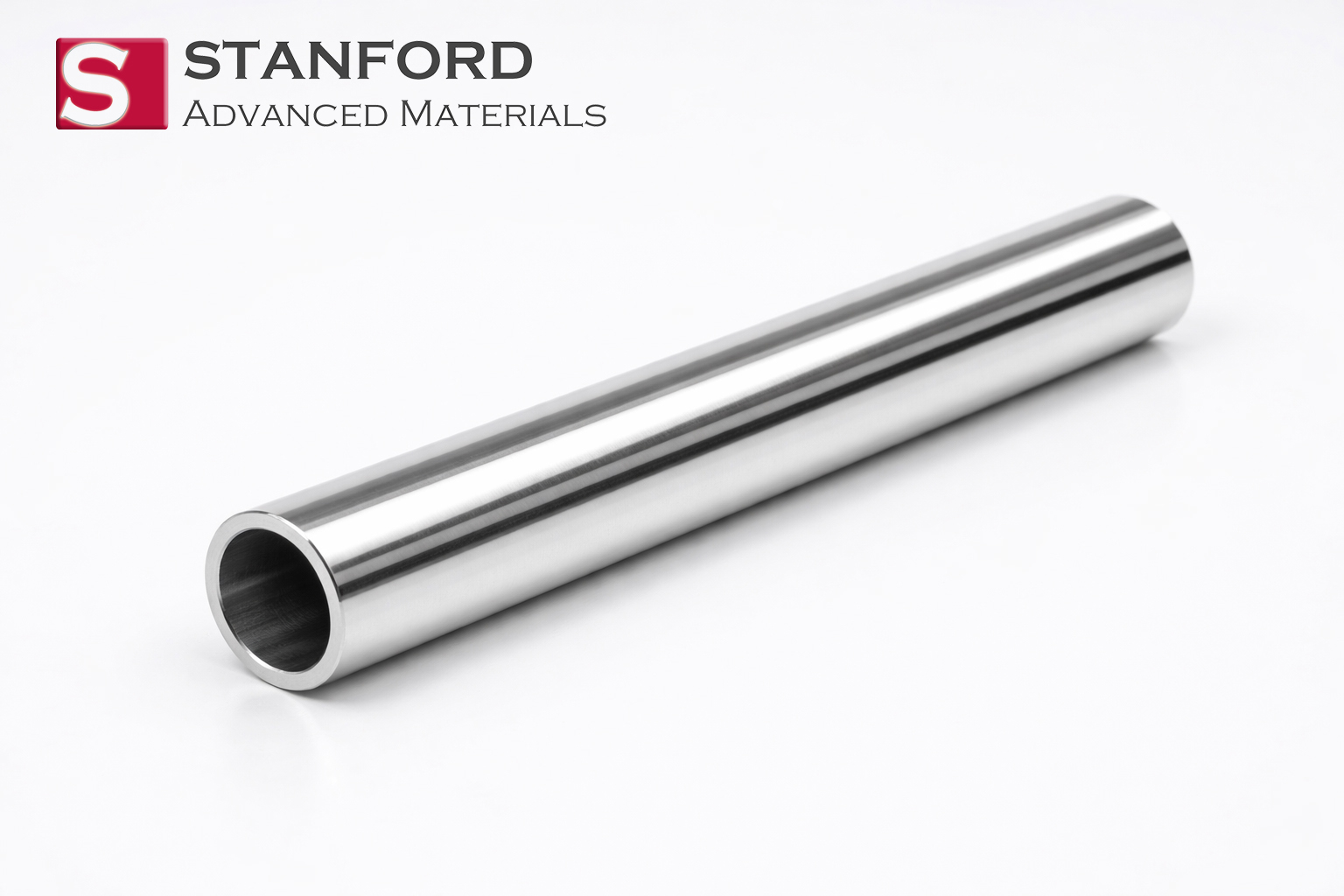
Designed for advanced physical vapor deposition (PVD) systems, our platinum rotary targets provide reliable performance in critical applications through controlled material properties and geometry.
| Material | Platinum (Pt) |
| Purity | ≥ 99.9% (Standard) |
| Form | Rotary Target (Cylindrical) |
| Density | > 21.0 g/cm³ (Typical) |
Key Advantage: Engineered for uniform erosion and high material utilization.
Customization: Outer Diameter (OD), Inner Diameter (ID), Length, and bonding available.
Typical Applications: Semiconductor barriers/electrodes, corrosion-resistant coatings, optical films, and research.
Complete specifications for technical evaluation (Standard Item: ST10712).
| Parameter | Specification / Typical Value | Notes / Process Relevance |
|---|---|---|
| Material | Platinum (Pt) | — |
| Purity (Standard) | ≥ 99.9% | Higher grades (99.95%, 99.99%) available. |
| Density | ≥ 21.0 g/cm³ | High density promotes uniform sputtering and stability. |
| Grain Size | < 100 μm (typical) | Fine, controlled structure for consistent film morphology. |
| Dimensions | Custom (OD, ID, Length) | Provide drawing or specifications. |
| Electrical Resistivity | ~10.6 μΩ·cm | @ 20°C. |
| Thermal Conductivity | 71.6 W/(m·K) | @ 20°C. |
| Melting Point | 1768 °C | — |
| Bonding | Available upon request (e.g., to Cu backing tube). | — |
1. Purity & Composition: Engineered for Performance
Our standard ≥99.9% purity target is designed to meet the demands of most industrial and research applications. For processes where specific trace elements could be detrimental, we offer upgraded purity grades (99.95%, 99.99%) with full compositional analysis. This allows direct control over metallic impurities that can affect film electrical properties or long-term stability in aggressive environments.
2. Density & Microstructure: The Foundation of Process Stability
The achieved density (>21.0 g/cm³) and fine grain structure are critical for predictable performance. A dense, homogeneous target minimizes local thermal variations and arcing during sputtering. The controlled grain size ensures smooth erosion over the target’s lifespan, contributing to consistent deposition rates and reduced risk of particulate contamination in the deposited film.
3. Rotary Target Design: Optimized for Efficiency
The cylindrical rotary target geometry is designed for use with rotary magnetrons. This design promotes even heat distribution across the sputtering surface and significantly increases material utilization compared to planar targets, leading to longer operational cycles and reduced cost-of-ownership.
4. Application-Specific Guidance
Stanford Advanced Materials (SAM) implements strict process controls from raw material to final machining. Each platinum rotary target order is accompanied by a comprehensive Certificate of Analysis (CoA), providing traceable data on composition and key physical properties to support your quality management and process validation protocols.
Request a Formal Quotation or Technical Data Sheet
For a precise quote and to ensure specification alignment, please provide:
Submit your review | |
Our lab acquired a cylindrical platinum target with a density of over 21 g/cm3. The results were fantastic for our corrosion-resistant coatings. The target showed minimal erosion, and we achieved a smooth surface finish. Will definitely consider ordering again for future projects!
I purchased a 3" platinum rotary target with ≥99.9% purity for my semiconductor project. The quality was exceptional, and it delivered consistent sputtering results. I noticed a significant improvement in the film quality compared to previous materials. Highly recommend!