
How to Choose Molybdenum Boats: Selection Guide for PVD and High-Temperature Applications
Introduction
If you work with PVD coating or high-temperature furnaces, you’ve probably run into this question: What’s the best container for holding evaporation materials like aluminum, gold, or silver?
The short answer for many applications is a molybdenum boat — or Mo boat, as most engineers call it.
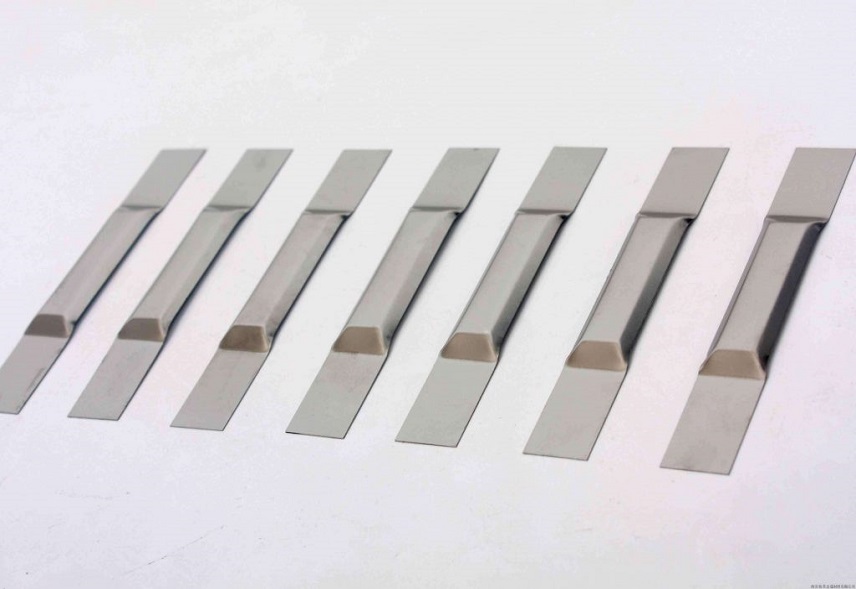
Molybdenum boats are small, boat-shaped containers made from high-purity molybdenum. You load them with evaporants, run an electric current through them, and the material evaporates onto your substrate. They also work as heating elements and sample holders in high-temperature furnaces for lab research and semiconductor manufacturing.
This guide focuses on how to select the right molybdenum boat for your setup — thickness, shape, purity, and whether you need molybdenum or tungsten.
Three Main Applications
SAM customers use molybdenum boats in three main areas.
| Application | What It’s Used For | Key Requirement |
|---|---|---|
| PVD evaporation coating | Placing Al, Au, Ag in the boat; current heating causes evaporation and deposition onto substrates | Even heating, clean evaporation, batch consistency |
| Semiconductor manufacturing | Depositing metal interconnects on chips | High purity, batch traceability, precise dimensions |
| Laboratory research | Thermal property testing (TGA/DTA), high-temperature chemical synthesis as reaction vessels | Custom sizes, small quantities, fast delivery |
Why Molybdenum?
Molybdenum boats work because the material has high thermal conductivity (even heating) and a 2620°C melting point — well above what most evaporation processes need. Tungsten and tantalum boats exist, but molybdenum hits a sweet spot for most users. The main limitation: molybdenum oxidizes in air at high temperatures, so use it only under vacuum or inert gas. Most PVD and semiconductor processes already run under vacuum, so this is usually fine.
How to Choose the Right Molybdenum Boat
If you search online, you’ll see molybdenum boats in various shapes, thicknesses, and sizes. Here’s how to narrow it down.
Step 1 – Determine the right thickness
| Thickness (typical) | Best for |
|---|---|
| 0.2 mm – 0.3 mm | Small-scale lab use, short evaporation runs |
| 0.5 mm | General PVD coating, most common choice |
| 1.0 mm or thicker | High-volume production, repeated thermal cycling |
Thicker boats last longer but take more current to heat up. There’s a trade-off.
Step 2 – Choose the boat shape
Most molybdenum boats are rectangular with a depressed center (where the evaporation material sits). But dimensions vary.
SAM customers usually specify:
- Overall length
- Width
- Depth of the depressed area
- Overall height
If you’re replacing an existing boat, the easiest approach is to measure your old one and send us the dimensions.
Step 3 – Specify purity
Standard molybdenum boats are 99.95% pure. That works for most PVD and lab applications.
Semiconductor customers sometimes ask for 99.97% or higher. The cost difference is small, but not every application needs it.
Molybdenum vs. Tungsten: Which Boat Should You Use?
SAM supplies both molybdenum and tungsten boats. Customers sometimes ask which one to pick.
Here’s the simple comparison:
| Property | Molybdenum | Tungsten |
|---|---|---|
| Melting point | 2620°C | 3422°C |
| Density | 10.2 g/cm³ | 19.3 g/cm³ |
| Cost | Lower | Higher |
| Wettability by molten metals | Moderate (Al sticks) | Low (most metals don’t wet) |
| Typical use | General PVD, Al/Au/Ag evaporation | High-temperature applications, metals that react with Mo |
The practical rule:
- Start with molybdenum. It’s cheaper and works for most evaporation materials.
- Switch to tungsten only if molybdenum reacts with your evaporant or if you need an even higher temperature.
Service Life: How Long Does a Molybdenum Boat Last?
That depends on several factors.
| Factor | Effect on life |
|---|---|
| Evaporation material | Some metals (like aluminum) wet and attack molybdenum more than others |
| Temperature cycle | Frequent heating/cooling causes thermal fatigue |
| Purity of the boat | Higher purity = longer life |
| Atmosphere | Vacuum or inert gas = long life; air with oxidation = very short life |
In practice, SAM customers typically get anywhere from 20 to 100 evaporation cycles from a single boat. Heavy users keep spare boats on hand and rotate them.
Handling and Safety Notes
Molybdenum boats are not dangerous by themselves, but there are a few things to keep in mind.
Before first use:
- Clean the boat with acetone or alcohol to remove surface oils
- Some users pre-bake the boat at high temperature under vacuum to outgas any impurities
During use:
- Always use under vacuum or inert gas — never in open air at high temperature
- Ramp current slowly to avoid thermal shock
- Don’t overload the boat with evaporation material
After use:
- Let the boat cool before handling
- Check for cracks or deformation before reusing
- Replace when you see visible pitting or thinning
Conclusion
Three questions to ask yourself before you order a molybdenum boat:
- What are you evaporating? (Al, Au, Ag, or something else?)
- What’s your setup? (Chamber size, current capacity, vacuum level?)
- How many cycles do you need? (Lab use vs. production volume?)
Once you have those answers, the choices about thickness, size, and purity become much easier. From there, it’s just a matter of matching your specs to the right boat — and SAM can help with that.


