(949) 407-8904 Mon - Fri 08:00 - 17:00 1940 East Deere Avenue, Suite 100, Santa Ana, CA 92705, USA

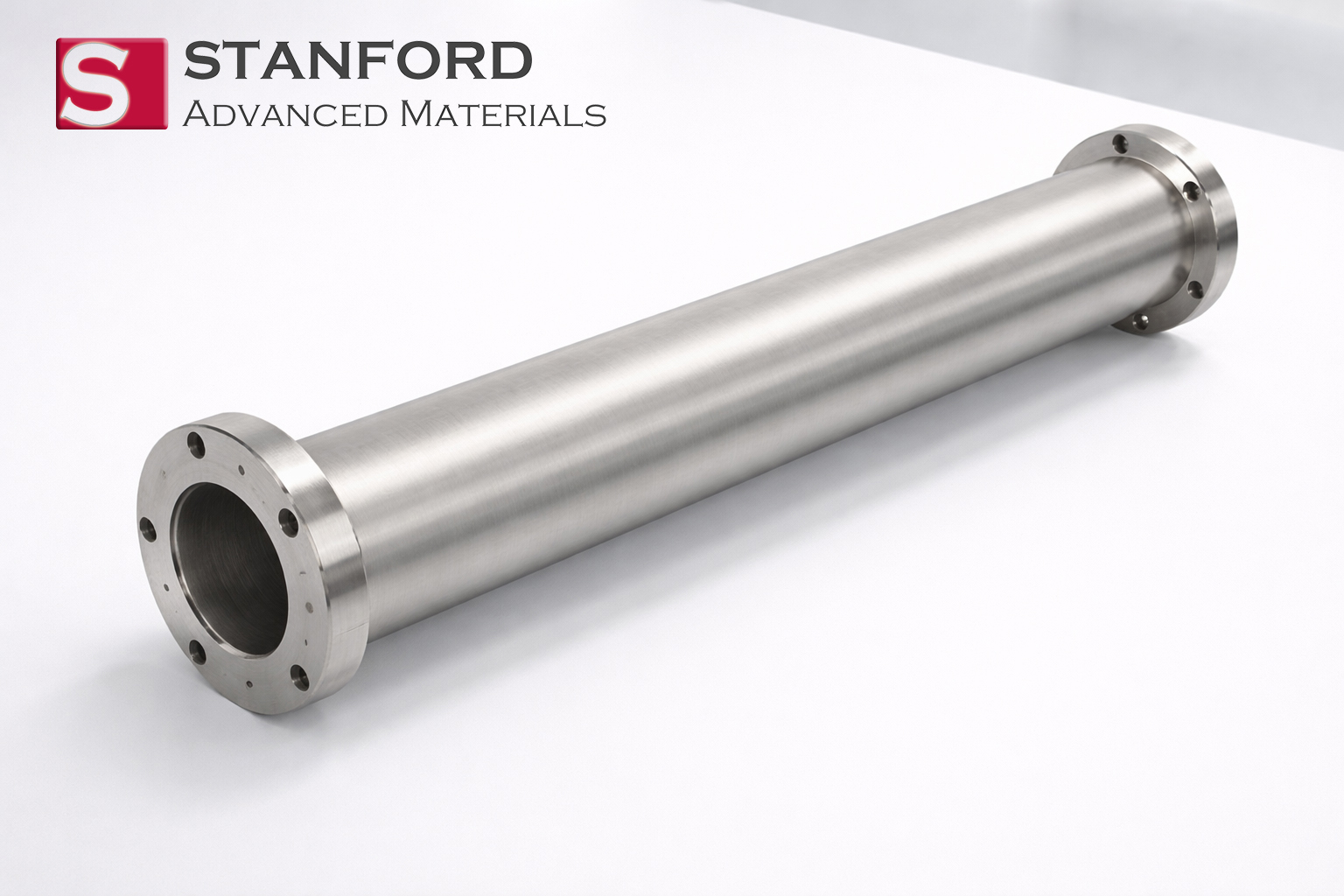
ST11212 High-Purity Tin (Sn) Rotary Sputtering Target

Our Tin (Sn) Rotary Sputtering Targets are engineered in a tubular geometry for high-throughput, high-material-utilization deposition processes. Unlike planar targets, the rotating design continuously presents a fresh, clean surface to the plasma, significantly reducing arcing, heat buildup, and enabling the stable, high-power deposition of tin films for large-area or roll-to-roll coating applications.

Material Tin (Sn)
Target Geometry Rotary (Tubular/Cylindrical)
Purity ≥ 99.99% (4N) Standard
Key Advantage High Deposition Rate & Extended Target Life

Core Benefit: The rotary configuration is specifically designed to overcome the limitations of planar tin targets—particularly localized melting and “tin splash”—by distributing heat and erosion evenly around the rotating tube. This enables more aggressive, stable sputtering parameters.

Customization: Tubular dimensions (length, outer diameter, wall thickness) are fully customizable to fit your rotary cathode. Purity grades up to 99.999% and specialized end-fixture designs are available.

Ideal For: High-volume deposition of tin or tin oxide films on architectural glass, flexible electronics, packaging materials, and for functional coatings on automotive or consumer electronics components.


Description

Complete Technical Specifications

For detailed evaluation and procurement (Product Code: ST11212).

Parameter Specification / Typical Value
Material Tin (Sn)
Target Type Rotary (Tubular/Cylindrical) Sputtering Target
Purity (Standard) ≥ 99.99% (4N)
Manufacturing Process Vacuum Arc Remelting (VAR) & Precision Tube Forming
Density > 7.26 g/cm³
Melting Point 231.9 °C
Standard Shape Tubular (Cylinder)
Key Dimensions Customizable: Length, Outer Diameter (OD), Wall Thickness
Cooling Method Internal Water Cooling (via rotary union)
Sputtering Mode DC Magnetron Sputtering (with rotary cathode power supply)
Key Impurity Control Low Pb, Bi, Cu (critical for film purity and performance)
Surface Finish Uniform, machined for consistent initial erosion
Certification CoA with Full Chemical Analysis (GDMS/ICP-MS) and Dimensional Report

Technical & Application Notes

1. Why Choose a Rotary Target for Tin Deposition?

The rotary (tubular) target design provides decisive advantages for high-volume tin coating:

  • Dramatically Reduced Arcing & Droplets: Continuous rotation prevents the formation of permanent racetracks and associated heat-affected zones that lead to micro-melting and particulate emission (“splashing”), a major issue with low-melting-point planar tin targets.
  • Higher Power Capability & Deposition Rate: Efficient internal cooling and uniform heat distribution allow the application of higher DC power, enabling faster coating speeds essential for production economics.
  • Superior Material Utilization (>80%): The entire cylindrical surface erodes uniformly, compared to the shallow racetrack of a planar target, drastically reducing material waste and cost-of-ownership.
  • Extended Maintenance Intervals: Longer target life and more stable process mean fewer system shutdowns for target replacement or conditioning.

2. Dominant Applications for Tin Rotary Targets

This target type is the workhorse for large-area and high-throughput coating lines:

  • Architectural & Low-E Glass: High-power, stable deposition of tin oxide (SnO₂) or fluorine-doped tin oxide (FTO) films for energy-efficient window coatings on large glass panels.
  • Flexible Electronics & Web Coating: Deposition of conductive tin or tin oxide layers onto flexible polymer webs (PET, PI) in roll-to-roll systems for touch sensors, flexible displays, and packaging.
  • High-Volume Protective & Decorative Coatings: Uniform application of tin or tin alloy films on automotive trim, consumer electronics housings, or food packaging materials for corrosion resistance and aesthetics.
  • Battery Electrode Manufacturing: For R&D and production of thin-film battery electrodes where high-rate, uniform deposition is required.

3. System Integration & Process Considerations

Integrating a tin rotary target requires specific system components and setup:

  • Rotary Cathode Assembly: Requires a compatible magnetron assembly with a rotary drive motor, slip ring for power, and rotary union for cooling water.
  • Balancing & Runout Tolerance: The tubular target must be precisely machined and balanced to ensure smooth, vibration-free rotation at typical speeds (20-100 RPM).
  • Reactive Sputtering for Oxides: When depositing SnO₂, precise control of oxygen flow and plasma conditions is needed. The rotating surface helps maintain a consistent target surface condition in a reactive environment.
  • Cooling Efficiency: Effective internal water cooling is paramount to manage the increased power load and prevent the tin tube from deforming due to its low melting point.

Quality Assurance

Our manufacturing focuses on the unique requirements of rotary targets:

  1. Vacuum Arc Remelting (VAR): Used to produce ingots with exceptionally uniform composition and low gas content, critical for preventing defects during high-power sputtering.
  2. Precision Tube Manufacturing: Ensures precise inner diameter (ID) and outer diameter (OD) with consistent wall thickness for reliable cooling and balanced rotation.
  3. Metallographic & Ultrasonic Inspection: Verifies microstructure homogeneity and identifies any internal flaws that could lead to tube failure under thermal stress.
  4. Dimensional & Runout Certification: Each target is measured to guarantee it meets the tight tolerances required for smooth integration into your rotary cathode.

Why Stanford Advanced Materials (SAM) for Rotary Targets

  • Rotary Target Specialists: We understand the design, metallurgy, and machining complexities specific to high-performance tubular targets.
  • High-Purity Materials Expertise: We combine our knowledge of ultra-pure tin with advanced forming techniques to create reliable rotary targets.
  • Full System Perspective: We provide targets that are engineered to work seamlessly with industry-standard rotary cathode systems for optimal performance.

Request More Information

Configure Your High-Throughput Tin Coating Line
To provide an accurate specification and quote, please inform us of:
  1. Your rotary cathode manufacturer and model number, or required tubular dimensions (Length x OD x Wall Thickness).
  2. Primary application (e.g., Low-E glass, flexible TCO, protective coating) and intended film (metallic Sn or SnO₂).
  3. Desired purity level and any specific performance requirements (e.g., deposition rate, target lifetime).
Request a Quote