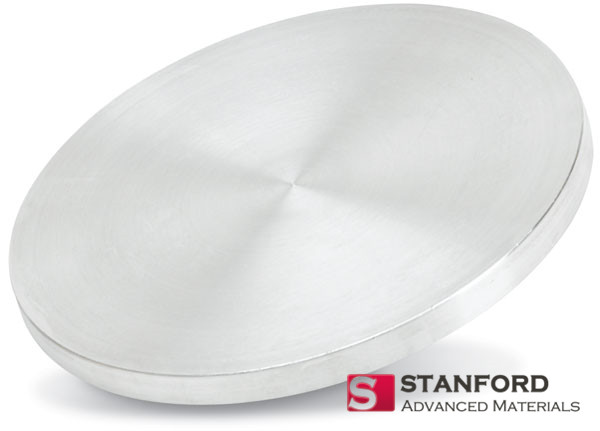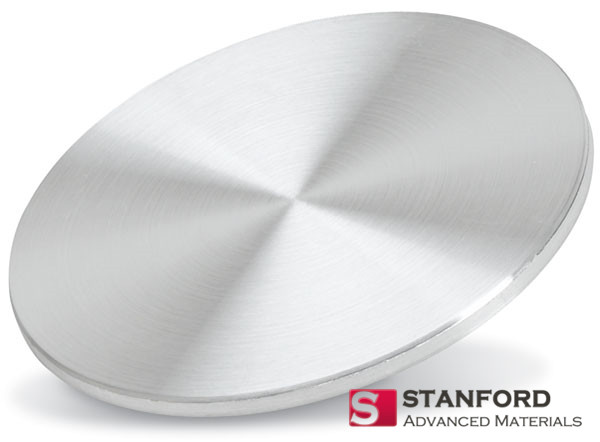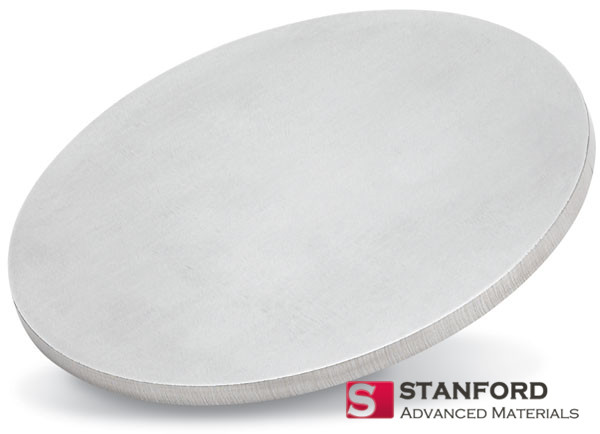
Our Copper Gallium (CuGa) Rotary Sputtering Targets are a critical component in the manufacturing of Copper Indium Gallium Selenide (CIGS) solar cells. Designed for reactive co-sputtering or sequential deposition, these targets provide a controlled, high-purity source of copper and gallium to form the precise Cu-Ga alloy or metal precursor layers that determine the final bandgap and efficiency of the photovoltaic absorber.
| Material | Copper Gallium Alloy (CuGa) |
| Standard Composition | Customizable (Typical Ga: 5-30 at.%) |
| Purity | ≥ 99.99% (4N) |
| Form | Rotary Sputtering Target (Tubular) |
Key Advantage: Enables precise control over the Ga/(Ga+In) ratio in the CIGS layer, which is directly tunable to optimize solar cell bandgap and performance for different applications.
Customization: Gallium content, tube dimensions (OD, ID, Length), and purity fully customizable to match your CIGS process recipe.
Typical Applications: Deposition of Cu-Ga precursor layers for CIGS thin-film solar modules, research on new chalcopyrite photovoltaic materials, and specialized alloy film studies.
For detailed evaluation and procurement (Standard Reference: ST11183).
| Parameter | Specification / Typical Value |
|---|---|
| Material | Copper Gallium Alloy (CuGa) |
| Composition Range | Ga: 5 – 30 at.% (Balance Cu), Customizable |
| Purity (Metal Basis) | ≥ 99.99% |
| Density | ~7.5 – 8.5 g/cm³ (Alloy dependent) |
| Microstructure | Homogeneous, Single-phase or intermetallic (CuGa₂) |
| Standard Shape | Tubular (Rotary Target) |
| Key Dimensions | Custom OD, ID, Length |
| Sputtering Method | DC Magnetron (Standard) |
| Thermal Conductivity | Moderate to High (Alloy dependent) |
| Bonding/Integration | Compatible with standard rotary cathode systems |
| Certification | Certificate of Composition (CoC) provided |
1. The Heart of CIGS Bandgap Engineering
The performance of a CIGS solar cell is highly dependent on its bandgap, which is engineered by adjusting the Gallium to Indium ratio [Ga/(Ga+In)]. Our CuGa targets are used, often in conjunction with separate In or CuIn targets, to precisely control this ratio during the sputtering of the metal precursor stack. A higher Ga content increases the bandgap, which can optimize voltage output and performance in specific light spectra.
2. Overcoming Gallium’s Metallurgical Challenges
Gallium has a low melting point (29.8°C) and a strong tendency to segregate from copper, making the production of a homogeneous CuGa alloy target technically demanding. SAM employs specialized powder metallurgy or controlled solidification techniques under inert atmosphere to create a uniform, dense target with the desired phase (often containing the CuGa₂ intermetallic compound). This homogeneity is essential for consistent, predictable sputtering rates of both elements.
3. Application-Specific Guidance
Given the critical role of composition in CIGS performance, we provide rigorous analysis. Inductively Coupled Plasma (ICP) analysis quantifies the exact Cu:Ga ratio. X-ray Diffraction (XRD) identifies the phases present (e.g., Cu, CuGa₂). SEM/EDS mapping is performed to demonstrate elemental homogeneity and the absence of gallium-rich or copper-rich segregation zones. This comprehensive data ensures your sputtering process starts with a reliable, well-characterized material source.
Discuss Your CIGS Process & Request a Quote
This target is highly application-specific. For an accurate quote and technical discussion, please provide: