(949) 407-8904 Mon - Fri 08:00 - 17:00 1940 East Deere Avenue, Suite 100, Santa Ana, CA 92705, USA

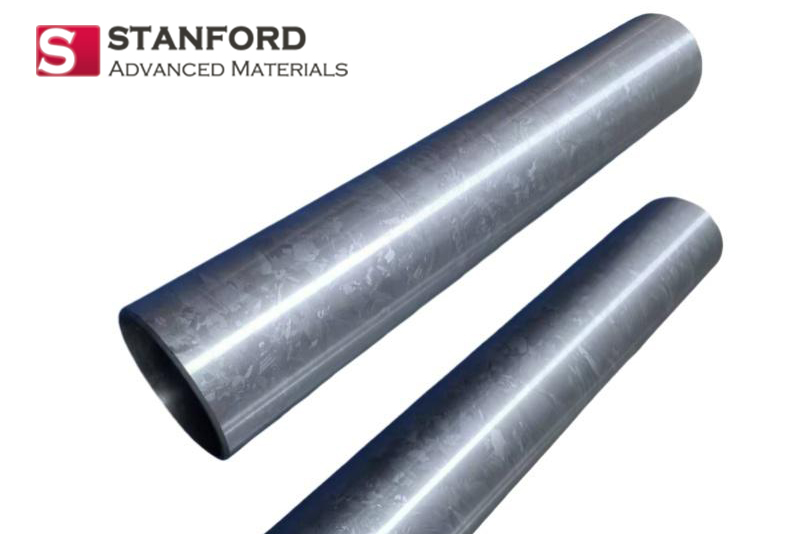
ST6843 Silicon (Si) Rotary Sputtering Target

Our Silicon (Si) Rotary Sputtering Targets are engineered for high-volume, uniform deposition of silicon thin films critical for modern electronics and renewable energy. The tubular rotary design maximizes material utilization (>80%) and provides exceptional film thickness uniformity, making it the industry-preferred choice for coating large-area substrates in display, photovoltaic, and semiconductor production lines.

Material Silicon (Si)
Typical Purity ≥ 99.9% (3N) to 99.9999% (6N)
Form & Shape Rotary Sputtering Target (Tubular/Cylindrical)
Conductivity Type Intrinsic, P-type (B doped), or N-type (P, As doped)
Key Properties High Deposition Rate | Superior Large-Area Uniformity | Extended Target Life
Key Advantage Delivers significantly higher material utilization and more consistent film properties compared to planar targets, dramatically reducing cost-of-ownership and downtime in high-throughput manufacturing.

Key Advantage: The rotating cylindrical design ensures even erosion around the circumference, enabling stable, long-duration sputtering runs essential for coating Gen 8.5/10.5+ display glass and large-format photovoltaic panels.

Customization: Purity (3N to 6N), doping type/level, tubular dimensions (OD, ID, Length), grain structure (monocrystalline, polycrystalline), and surface finish are fully customizable for your specific rotary cathode system and process.

Primary Applications: Active and doped silicon layers in Thin-Film Transistor (TFT) arrays for LCD/OLED displays; intrinsic and doped silicon layers in thin-film silicon (a-Si/µc-Si) solar cells; silicon-based passivation and barrier layers in semiconductor devices; silicon nitride/oxide precursor via reactive sputtering.


Description

Complete Technical Specifications & Capabilities

Comprehensive specifications for high-volume silicon film deposition in display and photovoltaic manufacturing.

Parameter Specification / Details
Material Silicon (Si)
Purity Grades Standard: 99.9% (3N), 99.99% (4N), 99.999% (5N), 99.9999% (6N)
Crystal Structure Polycrystalline (Standard) | Monocrystalline (Available)
Doping Intrinsic (Undoped) | P-type (Boron) | N-type (Phosphorus, Arsenic) – Doping level customized
Resistivity (Target) Wide range from <0.01 Ω·cm (heavily doped) to >100 Ω·cm (high purity intrinsic)
Density ≥ 2.33 g/cm³ (>99% of theoretical)
Standard Shape Tubular / Cylindrical Rotary Target
Dimensions Fully Customizable: Outer Diameter (OD), Inner Diameter (ID), Length (L)
Typical OD Range 4″ to 10″ (100 mm to 250 mm) and larger for Gen 10.5+ applications
Surface Finish Precision ground and etched to optimize sputtering performance and minimize initial particulates
Bonding / Integration Designed for direct mounting or bonding to cooling sleeves in standard rotary cathodes
Manufacturing Method Casting of high-purity poly-Si ingots, precision machining, boring, and grinding
Sputtering Method DC Magnetron Sputtering (for conductive doped Si) | RF Magnetron Sputtering (for intrinsic Si)
Material Utilization >80% (Typical for rotary design)
Quality Documentation Certificate of Analysis with resistivity, doping type/level, purity (GDMS), and dimensional report

Technical & Application Deep Dive

1. The Display Industry Backbone: Silicon for TFT Arrays

Silicon rotary targets are indispensable in the manufacturing of Flat Panel Displays (FPDs):

  • Thin-Film Transistor (TFT) Layers: Sputtered silicon films form the active semiconductor layer (typically a-Si or µc-Si) and the heavily doped source/drain contact layers in the TFTs that control each pixel in LCD and OLED displays.
  • Why Rotary Targets for Displays? Display glass substrates have grown to Gen 10.5 (3370×2940 mm). Rotary targets provide the necessary thickness uniformity (<±3%) across these vast areas and the ultra-high purity required to prevent TFT performance variation and yield loss.
  • Doping for Functionality: Targets are supplied with precise doping (e.g., Phosphorus for n⁺ layers) to achieve the required electrical conductivity for Ohmic contacts.

2. Photovoltaics: Depositing Thin-Film Silicon Solar Cells

In the solar industry, silicon rotary targets enable cost-effective production:

  • Thin-Film Silicon (TF-Si) Solar Cells: Used to deposit the p-i-n layers of amorphous silicon (a-Si) and microcrystalline silicon (µc-Si) in tandem or multi-junction solar cell structures on glass or flexible substrates.
  • Advantages for PV: The high material utilization of rotary targets directly lowers the cost per watt of the deposited silicon. The uniformity ensures consistent cell performance across large panel areas.
  • Reactive Sputtering for Silicon Compounds: By introducing nitrogen or oxygen, the same Si target can be used to deposit silicon nitride (SiNx) anti-reflection/passivation layers or silicon oxide (SiOx) barrier layers, streamlining the PV production toolset.

3. Semiconductor & Advanced Applications

Beyond displays and PV, silicon targets serve specialized functions:

  • Semiconductor Barrier & Etch-Stop Layers: Silicon films can be used as etch-stop layers or as part of advanced metallization schemes.
  • Optical Coatings: Sputtered silicon, due to its high refractive index in the IR, is used in specialized optical filters and coatings. It is also the precursor for SiO2 and SiNx coatings via reactive sputtering.
  • Research on Novel Materials: Used in co-sputtering systems to synthesize silicon-based alloys, silicides, or high-entropy alloys for exploratory research.

4. Critical Advantages of the Rotary Design

The rotary configuration solves key production challenges:

  • Unmatched Uniformity for Large Areas: The linear erosion profile of a rotating cylinder translates to highly uniform deposition over very wide substrates, which is physically difficult to achieve with a planar target.
  • Dramatically Extended Target Life: The entire cylindrical surface is utilized, leading to much longer production runs between target changes, increasing equipment uptime.
  • Suppression of Nodules & Arcing: Continuous surface movement helps prevent the buildup of insulating nodules (common in reactive sputtering), resulting in a more stable plasma with fewer defects-generating arcs.
  • Efficient Cooling: The tubular design allows for effective internal cooling, enabling higher power operation for increased deposition rates without target overheating.

Quality Assurance & Manufacturing

Stanford Advanced Materials employs a precision manufacturing process tailored for large-format rotary targets:

  • High-Purity Ingot Casting: Using semiconductor-grade polysilicon feedstock to control bulk impurities and achieve desired doping uniformity.
  • Precision Boring & Grinding: CNC machining ensures critical dimensional tolerances for OD, ID, wall thickness, concentricity, and straightness, which are vital for balanced rotation and stable film properties.
  • Resistivity & Doping Uniformity Mapping: The resistivity of the target is mapped along its length and circumference to ensure consistent electrical properties, which translates to stable sputtering rates.
  • Surface Conditioning: Special etching or cleaning processes are used to remove machining damage and prepare a surface that minimizes initial particulate generation during the target conditioning (“burn-in”) phase.
  • Dynamic Balancing: Completed targets are balanced to ensure smooth, vibration-free operation at typical rotational speeds.

Why Choose SAM for Your Silicon Rotary Targets?

  • Industry-Proven for High-Volume Manufacturing: Our targets are designed to meet the rigorous demands of 24/7 display and solar panel production lines.
  • Full-Range Purity & Doping Control: We supply everything from cost-effective 3N purity for some PV applications to ultra-high 6N purity for advanced semiconductor R&D, with precise doping control.
  • Mastery of Large-Format Target Fabrication: We specialize in manufacturing large-diameter, long-length tubular targets required for modern coating systems.
  • Technical Collaboration: We work as partners with equipment manufacturers and end-users to optimize target specifications for specific process windows and film property goals.

Next Steps: Get a Custom Quote

To receive a formal quotation or technical consultation, please provide:
  1. Your coating system model or required rotary target dimensions (OD, ID, Length).
  2. Material specification: Purity grade, doping type and target resistivity (or film sheet resistance goal).
  3. Primary application (e.g., TFT a-Si layer, PV intrinsic layer, semiconductor research).
  4. Annual volume requirements or project scale.
Request a Quote