(949) 407-8904 Mon - Fri 08:00 - 17:00 1940 East Deere Avenue, Suite 100, Santa Ana, CA 92705, USA

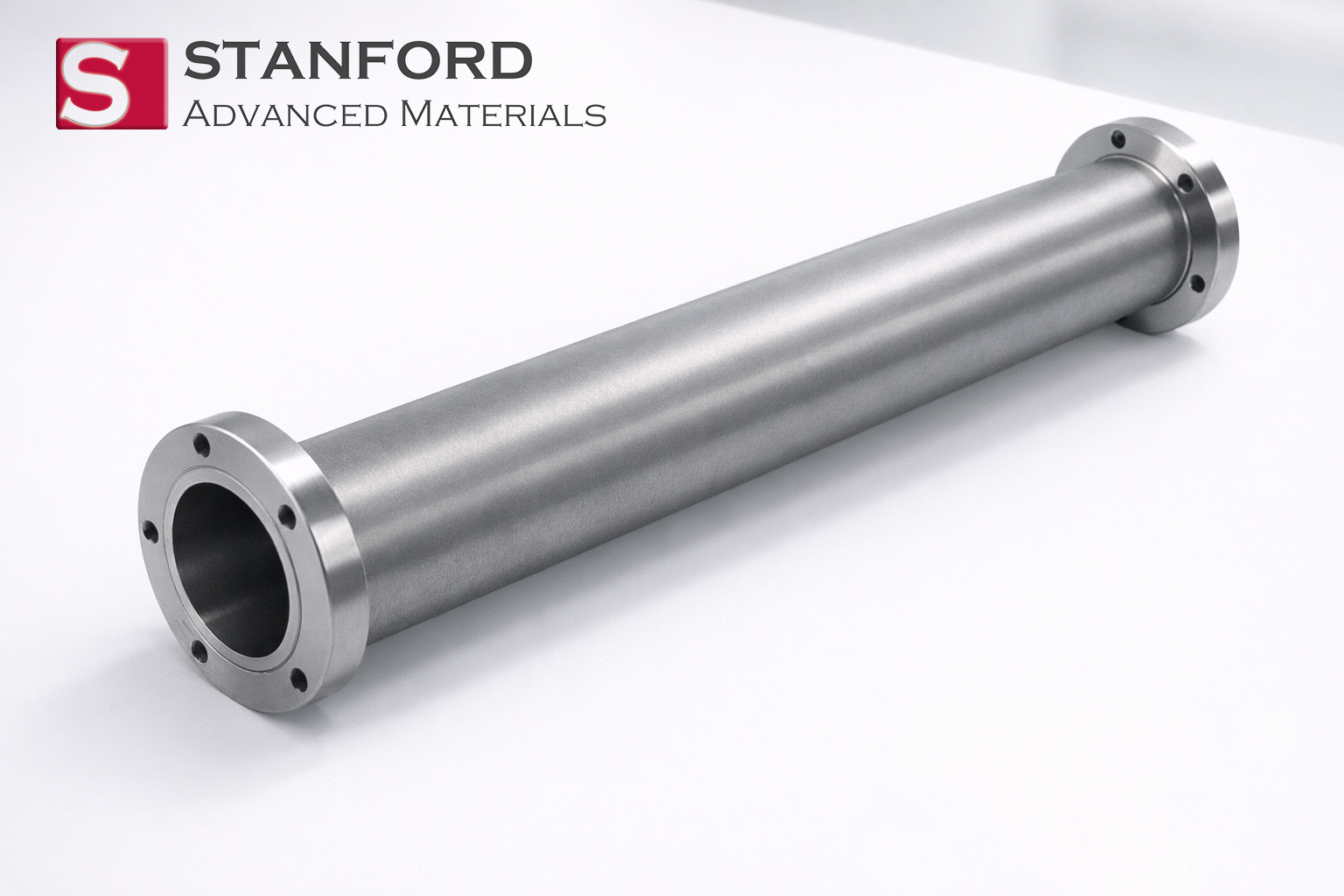
ST11218 Vanadium (V) Rotary Sputtering Target

Our Vanadium (V) Rotary Sputtering Targets are fabricated from high-purity vanadium, a versatile transition metal valued for its unique optical, electronic, and hydrogen-absorbing properties. The rotary tubular design enables uniform, high-volume deposition of vanadium films, which are essential for advanced functional applications ranging from dynamic smart windows to cutting-edge superconducting devices.

Product Code ST11218 (Standard Reference)
Material Vanadium (V)
Typical Purity ≥ 99.0% (99.9% and higher grades available)
Form & Shape Rotary Sputtering Target (Tubular)
Key Properties Hydrogen Permeability | Metal-Insulator Transition | Superconductivity (Tc ≈ 5.4 K)
Key Advantage Provides an efficient, uniform source for depositing vanadium-based films used in tunable optical coatings, hydrogen separation membranes, and as a critical component in multilayer superconducting devices.

Key Advantage: The rotary design ensures high material utilization and consistent film properties over long deposition runs, which is crucial for cost-effective production of functional coatings and research on vanadium’s unique phase transitions.

Customization: Purity (99% to 99.99%), tubular dimensions (OD, ID, Length), and surface finish are fully customizable for specific cathode assemblies and process requirements.

Primary Applications: Thermochromic VOx films for smart windows; hydrogen purification and sensing layers; buffer and electrode layers in superconducting devices (e.g., A15 compounds); alloying component in protective coatings.


Description

Complete Technical Specifications & Capabilities

Detailed specifications for depositing functional vanadium films in research and industrial coating systems.

Parameter Specification / Details
Material Vanadium (V)
Typical Purity ≥ 99.0% (Standard), 99.9%, 99.99% available
Crystal Structure Body-Centered Cubic (BCC)
Density ~6.0 g/cm³
Melting Point 1890 °C (3434 °F)
Superconducting Transition (Tc) ~5.4 K (For pure, bulk V)
Hydrogen Solubility High – Forms vanadium hydrides (VHx)
Standard Shape Tubular (Rotary Target)
Dimensions Custom OD, ID, and Length
Surface Finish Machined and cleaned for optimal sputtering performance
Bonding/Integration Compatible with standard rotary cathode mounts; optional bonding to backing tubes
Manufacturing Method Electron Beam Melting / Vacuum Arc Melting for high purity
Quality Documentation Certificate of Analysis with purity verification (GDMS/OES available)

Technical & Application Deep Dive

1. Functional Thin Films: Harnessing Vanadium’s Unique Properties

Vanadium films deposited from these targets enable several advanced technologies:

  • Smart Window Coatings: Vanadium oxide (VO2, V2O5) films, produced by reactive sputtering from V targets, exhibit a reversible metal-insulator transition near room temperature. This changes their optical properties (e.g., infrared transmittance), enabling thermochromic “smart” windows that dynamically regulate heat gain.
  • Hydrogen Technology: Vanadium is highly permeable to hydrogen and forms hydrides. Thin V films and V-based alloy membranes are researched for hydrogen purification, sensing, and storage applications.
  • Superconducting Devices: Vanadium is a Type-II superconductor. It is used in thin-film form in fundamental superconductivity research and as a component in multilayer structures for superconducting electronics (e.g., as a barrier in Josephson junctions).

2. The Alloying Element: Enhancing Coating Performance

As a sputtering source, vanadium is frequently used as an alloying component:

  • Wear-Resistant Alloys: Added to tool coatings (like TiAlN) to form VAlN or other complex nitrides, which can reduce friction and improve high-temperature performance through the formation of lubricious V2O5 at the surface.
  • Corrosion-Resistant Alloys: Vanadium improves the corrosion resistance of stainless steels and other alloys; thin film versions can be deposited for surface modification.
  • High-Entropy Alloys (HEAs): Used in co-sputtering systems as one of the principal elements for synthesizing novel, multi-component alloy films with tailored properties.

3. Advantages of the Rotary Target Design

The rotary configuration is particularly beneficial for vanadium deposition:

  • Uniformity for Functional Films: Consistent film thickness and composition are critical for the performance of optical, hydrogen, and superconducting devices. The rotary design provides superior uniformity over large substrate areas.
  • High-Rate, High-Volume Deposition: Ideal for coating large glass panels for smart windows or producing long lengths of hydrogen separation membrane tubing.
  • Efficient Use of Material: The rotating tube erodes evenly around its circumference, maximizing material utilization and reducing cost per coated substrate—important for cost-sensitive applications like architectural glass.

Quality Assurance & Manufacturing

Stanford Advanced Materials implements strict controls for vanadium target production:

  • Purity Analysis: Trace metallic impurities are quantified using Glow Discharge Mass Spectrometry (GDMS) or Inductively Coupled Plasma Optical Emission Spectrometry (ICP-OES), with particular attention to interstitial elements (O, N, C, H) that can affect film properties.
  • Microstructural Examination: Optical Microscopy and SEM are used to assess grain structure and ensure freedom from cracks, porosity, or inclusions that could cause arcing.
  • Dimensional Precision: Critical tubular dimensions (OD, ID, concentricity) are verified with precision gauges to ensure proper fit in rotary cathodes.

Why Choose SAM for Your Vanadium Targets?

  • Specialist in Functional Materials: We understand the specific property requirements for vanadium in optical, energy, and superconducting applications.
  • Flexible Purity Grades: We supply targets from industrial grade (99%) to high-purity R&D grade (99.99%), catering to both cost-sensitive production and cutting-edge research.
  • Expertise in Rotary Target Fabrication: Precision machining and quality control ensure our tubular targets provide reliable, stable performance in high-throughput systems.
  • Collaborative Development: We work with customers developing new applications, offering technical support on target specifications for optimal film performance.

Next Steps: Get a Custom Quote

To receive a formal quotation or technical consultation, please provide:
  1. Desired purity grade (e.g., 99%, 99.9%).
  2. Rotary target dimensions (OD, ID, Length) or your coating system model.
  3. Primary application (e.g., VOx for smart windows, hydrogen membranes, superconducting layers, alloy coatings).
  4. Estimated annual usage or project scale.
Request a Quote