(949) 407-8904 Mon - Fri 08:00 - 17:00 1940 East Deere Avenue, Suite 100, Santa Ana, CA 92705, USA

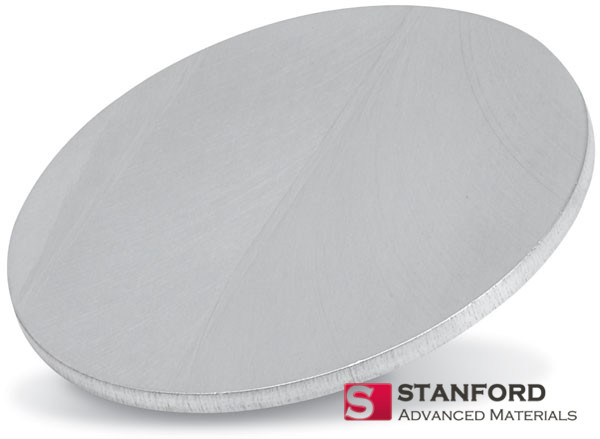
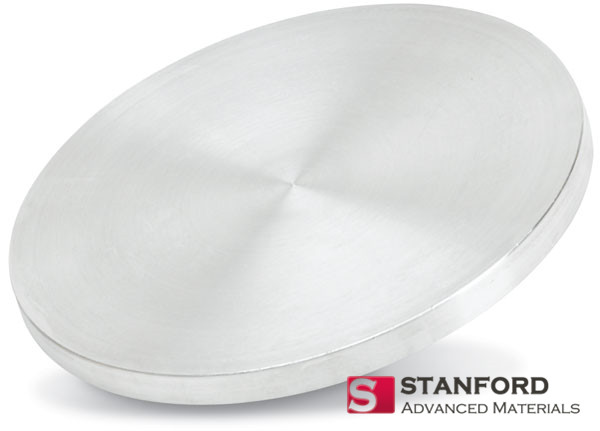
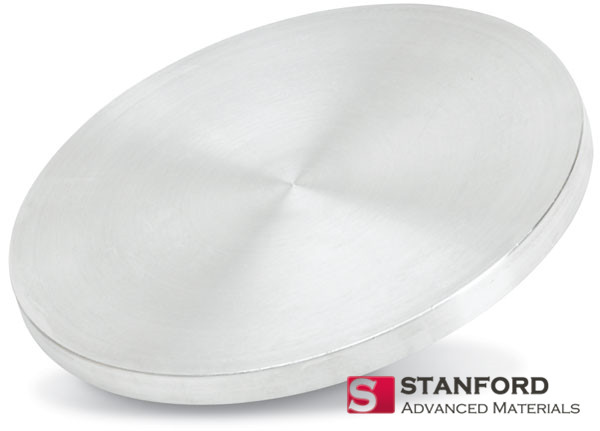
ST11208 High-Purity Silicon (Si) Planar Sputtering Target

Our High-Purity Silicon (Si) Planar Sputtering Targets are essential for depositing intrinsic, doped, or compound silicon films in semiconductor device fabrication, photovoltaic research, and infrared (IR) optics. The choice between monocrystalline and polycrystalline structure, along with stringent impurity control, directly determines the electrical and optical properties of the deposited layer.

Material Silicon (Si)
Purity ≥ 99.99% (4N) Standard
Available Structure Monocrystalline, Polycrystalline
Form Planar Sputtering Target

Key Advantage: Exceptionally low levels of dopants (B, P, As) and metallic impurities ensure predictable electrical resistivity and optical transmission in the deposited films, critical for research and precision manufacturing.

Customization: Purity (up to 99.999%), dimensions, crystal orientation (<100>, <111> for monocrystalline), and bonding to various backing plates fully customizable.

Typical Applications: Thin films for semiconductor gate electrodes, photovoltaic absorbers (a-Si, μc-Si), IR anti-reflection coatings, and silicon-based compound layers (e.g., SiOx, SiNx via reactive sputtering).


Description

Complete Technical Specifications

For detailed evaluation and procurement.

Parameter Specification / Typical Value
Material Silicon (Si)
Purity (Standard) ≥ 99.99% (4N)
Available Structure Monocrystalline (CZ/FZ), Polycrystalline
Resistivity (Intrinsic) > 1000 Ω·cm (High-Purity Grade)
Density 2.329 g/cm³
Band Gap 1.12 eV (300K)
Thermal Conductivity ~150 W/(m·K)
Standard Shape Rectangular Planar
Dimensions Fully Customizable
Sputtering Method DC or RF Magnetron Sputtering
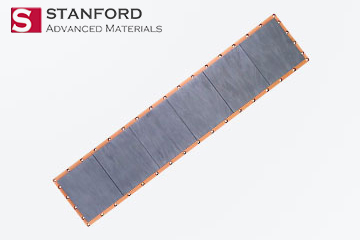
Bonding Options Indium, Elastomer, or high-temperature solders to Cu/Mo backing plates
Certification Certificate of Analysis (CoA) with GDMS/ICP-MS data for key impurities (B, P, metals)

Technical & Application Notes

1. Foundational Material for Semiconductor Technology

Silicon targets are used beyond bulk wafer substrates to deposit functional thin films:

  • Gate Electrodes & Local Interconnects: Sputtered silicon films, often subsequently doped or silicided, are used in transistor gates and local wiring for advanced CMOS devices.
  • Semiconductor-on-Insulator Layers: For specialized devices, silicon can be sputtered onto insulating substrates to form thin semiconductor layers.
  • Compound Dielectric Precursors: Sputtering from a pure Si target in reactive atmospheres (N2, O2) is a method to deposit silicon nitride (SiNx) or silicon oxide (SiOx) films for passivation or insulation.

2. Enabling Thin-Film Photovoltaic & Photonics Research

  • Amorphous (a-Si) & Microcrystalline (μc-Si) Solar Cells: Sputtering is one technique to deposit the intrinsic or doped absorber layers for thin-film solar cells. Target purity and hydrogenation during/after deposition critically affect cell efficiency.
  • Silicon-based Optical Coatings: Silicon’s transparency in the infrared makes it a key material for IR anti-reflection coatings and protective layers on optical components. The film density and stoichiometry (for SiOx) control the refractive index and absorption.

3. Material for Advanced Research & Compound Films

  • Silicon-Germanium (SiGe) Alloy Deposition: Co-sputtering from separate Si and Ge targets allows precise compositional control for depositing SiGe films used in high-speed heterojunction transistors and thermoelectric devices.
  • Resistive & Sensor Layers: The resistivity of sputtered silicon films can be tuned via doping, microstructure, and oxidation, making them candidates for thin-film resistors and sensing layers.

4. Sputtering & Handling Considerations

Silicon is a brittle semiconductor, requiring specific handling:

  • RF or Pulsed DC Sputtering: Required for pure, non-conductive intrinsic silicon. DC sputtering can be used for heavily doped (conductive) silicon grades.
  • Thermal Management: Despite good thermal conductivity, effective bonding and backside cooling are necessary to manage heat during high-power deposition.
  • Fragility: Silicon targets are brittle and require careful handling and robust packaging to prevent chipping or cracking.

Quality Assurance

For semiconductor-grade silicon targets, we provide detailed impurity analysis using Glow Discharge Mass Spectrometry (GDMS) to quantify trace elements at ppb levels. Special attention is paid to electrically active impurities like Boron (B) and Phosphorus (P), which drastically alter film resistivity. For monocrystalline targets, orientation and crystallographic defects are also characterized.

Why Stanford Advanced Materials (SAM)

  • Purity & Crystallinity Options: We supply both high-purity polycrystalline and oriented monocrystalline silicon targets to meet diverse research and production needs.
  • Application-Driven Specification: We help you select the right grade (intrinsic, doped, monocrystalline vs. polycrystalline) based on your desired film properties.
  • Precision Processing: Expertise in machining and bonding brittle silicon materials to ensure target integrity and optimal thermal contact during sputtering.

Request More Information

Specify Your Silicon Film Requirements
To recommend the optimal target, please provide:
  1. Primary application (e.g., semiconductor layer, PV absorber, IR coating, research).
  2. Required purity, resistivity range, and crystal structure (mono/poly).
  3. Target dimensions and bonding requirements.
  4. If reactive sputtering is planned (e.g., for SiOx/SiNx).
Request a Quote