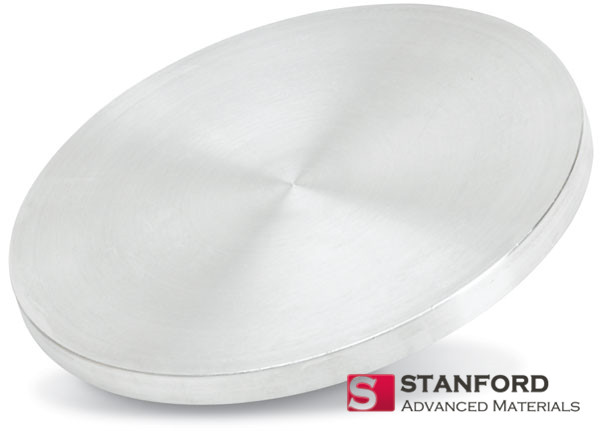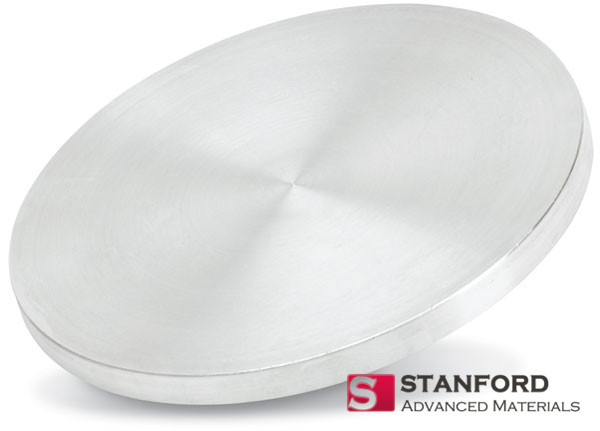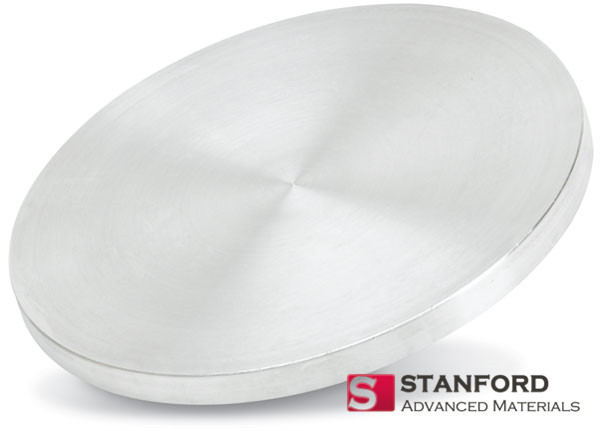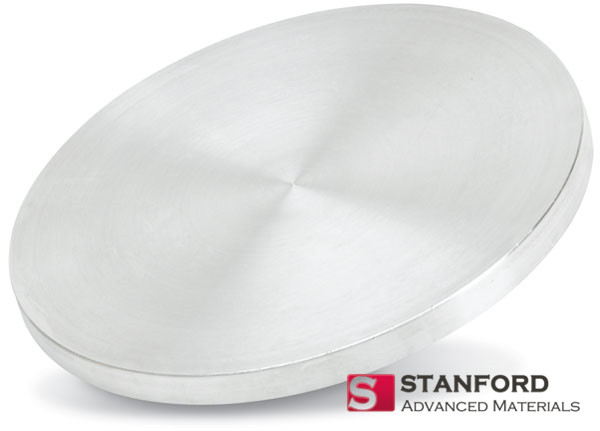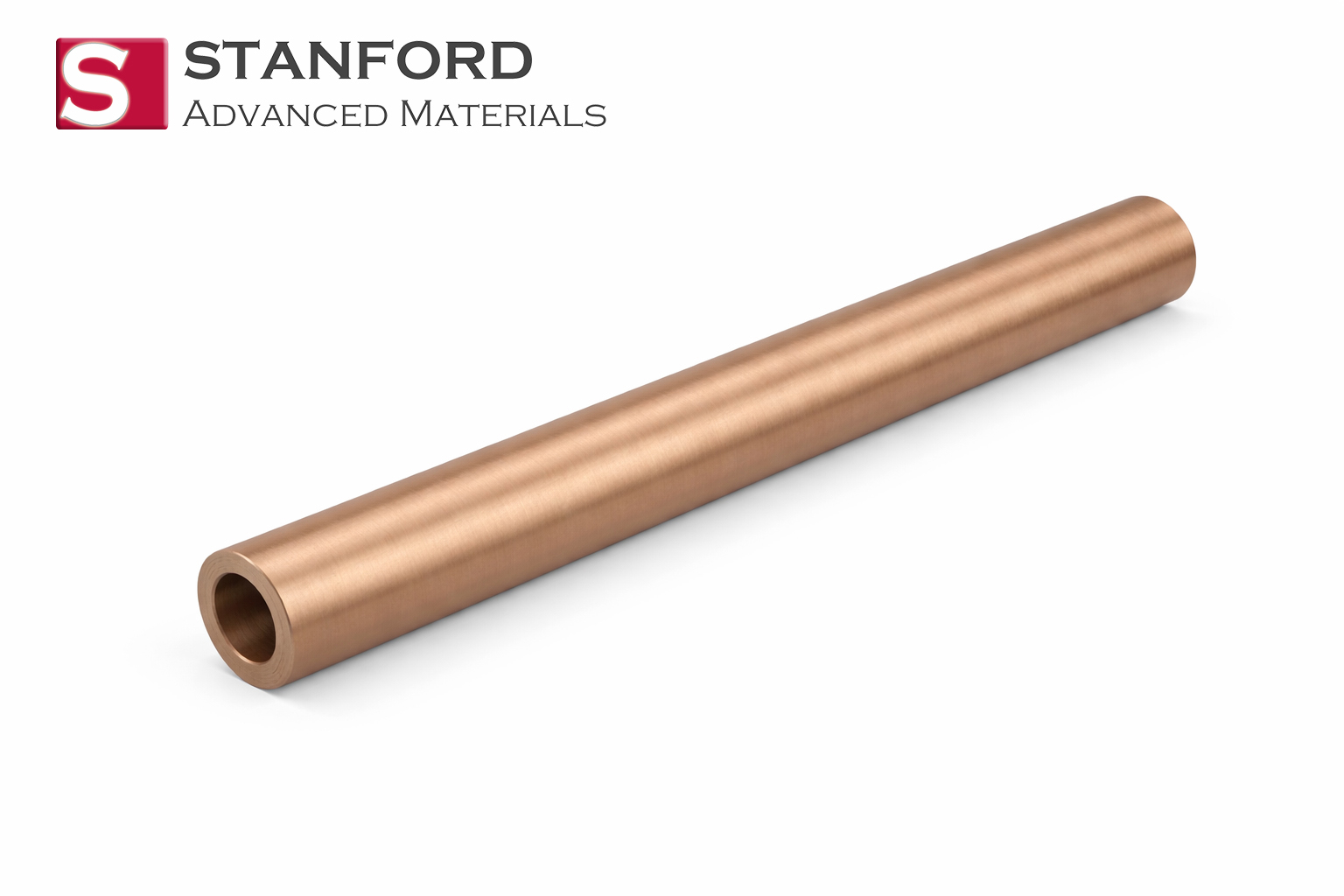
Our Copper Nickel Titanium (CuNiTi) Rotary Sputtering Targets are engineered for depositing advanced functional films, most notably in the field of thin-film Shape Memory Alloys (SMAs). This ternary system allows precise tuning of the martensitic transformation temperature, enabling the fabrication of micro-actuators, sensors, and smart coatings with tailored thermal and mechanical response.
| Material | Copper Nickel Titanium Alloy (CuNiTi) |
| Key Property | Precursor for Tunable Shape Memory Alloy Films |
| Typical System | Based on TiNi with Cu substitution (e.g., TiNiCu) |
| Purity | ≥ 99.9% (Metal Basis) |
| Form | Rotary Sputtering Target (Tubular) |
Key Advantage: Enables the deposition of ternary SMA films (e.g., TiNiCu) where Copper substitution for Nickel sharpens the transformation hysteresis and lowers transformation stress, critical for precise micro-electromechanical systems (MEMS) actuation.
Customization: Precise control over Cu/Ni/Ti ratios to target specific transformation temperatures (Mₛ, Aₛ) and properties.
Typical Applications: MEMS actuators & sensors, biomedical micro-devices, adaptive optics, anti-scaling coatings, and research on novel functional films.
For detailed evaluation and procurement (Standard Reference: ST11186).
| Parameter | Specification / Typical Value |
|---|---|
| Material | Copper Nickel Titanium Alloy (CuNiTi) |
| Composition Base | Ti-rich, with Cu substituting for Ni in TiNi system |
| Example Composition | Ti₅₀Ni₄₀Cu₁₀ (at.%), Ti₅₀Ni₃₅Cu₁₅ (Customizable) |
| Purity (Metal Basis) | ≥ 99.9% |
| Density | ~6.5 – 7.0 g/cm³ (Alloy dependent) |
| Transformation Temp. | Tunable from below 0°C to above 100°C (Film dependent) |
| Standard Shape | Tubular (Rotary Target) |
| Key Dimensions | Custom OD, ID, Length |
| Sputtering Method | DC Magnetron (for conductive alloys) |
| Bonding/Integration | Compatible with rotary cathode systems |
| Certification | Certificate of Composition (CoC) provided |
1. Engineering the Shape Memory Effect at the Micro Scale
The TiNi (Nitinol) binary system is the most common SMA, but adding a third element like Copper (Cu) offers significant advantages for thin-film applications:
Reduced Hysteresis: Cu substitution narrows the temperature gap between martensitic and austenitic transformations, allowing for more precise thermal control in actuators.
Lower Stress: Decreases the stress required for transformation, which is beneficial for delicate MEMS structures.
Improved Stability: Can enhance cyclic stability and resistance to fatigue in repeated actuation.
Our CuNiTi target provides the single-source precursor to deposit these optimized ternary alloy films uniformly over large areas or wafers.
2. Why Rotary Targets for SMA Film Deposition?
For research and potential production of MEMS devices on wafers or large substrates, uniformity is paramount.
Compositional Uniformity: Critical for ensuring consistent transformation temperature and actuation performance across an entire device array or wafer.
High-Throughput Capability: Rotary design supports efficient deposition for R&D scaling and potential volume manufacturing.
Material Efficiency: Maximizes the use of these high-value, specialty alloy materials.
3. The Challenge of Homogeneous Ternary Alloying
Achieving a homogeneous mixture of Ti (high melting point, reactive) with Cu and Ni (lower melting points) is non-trivial. Segregation can lead to films with multiple phases and unreliable properties. SAM employs Vacuum Arc Melting or Plasma Melting under inert atmosphere with repeated flipping/remelting, followed by homogenization heat treatments, to produce a uniform, single-phase or fine two-phase ingot before machining into the rotary target.
Given the sensitivity of SMA properties to composition, we perform Wavelength Dispersive Spectroscopy (WDS) for the most accurate quantitative analysis of Ti, Ni, and Cu. X-ray Diffraction (XRD) is used to identify the phases present in the target material (e.g., B2 austenite, martensite). Microstructural homogeneity is confirmed via SEM/EDS mapping. This ensures the target will sputter a consistent flux, leading to reproducible thin-film properties.
Discuss Your SMA Film Requirements & Request a Quote
This target is designed for specialized research and development. To specify your needs, please provide: