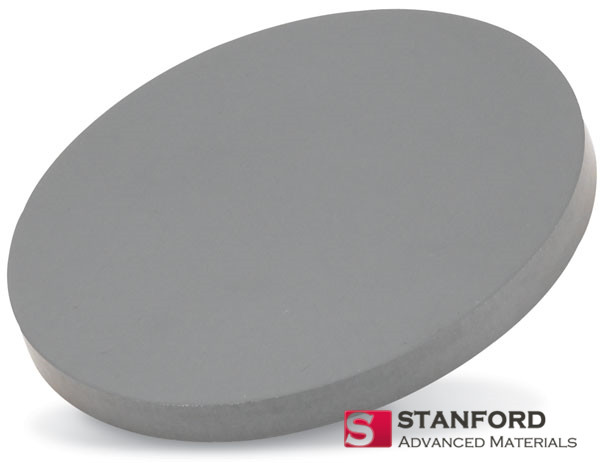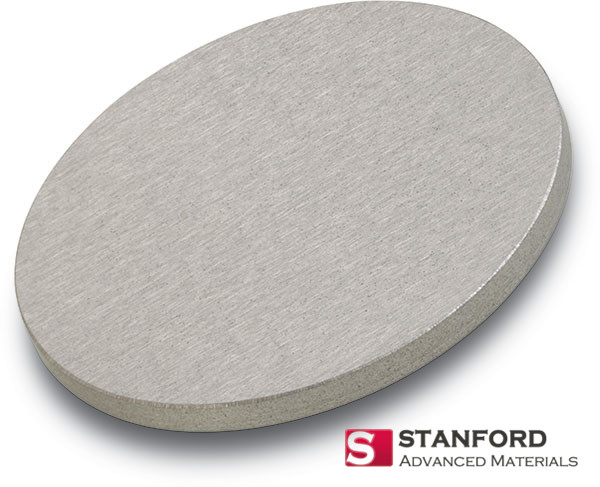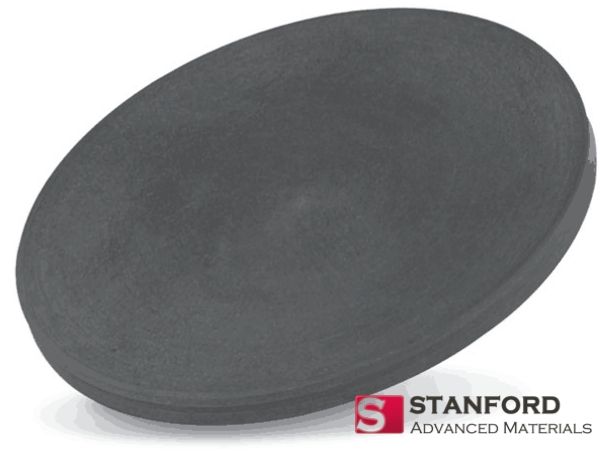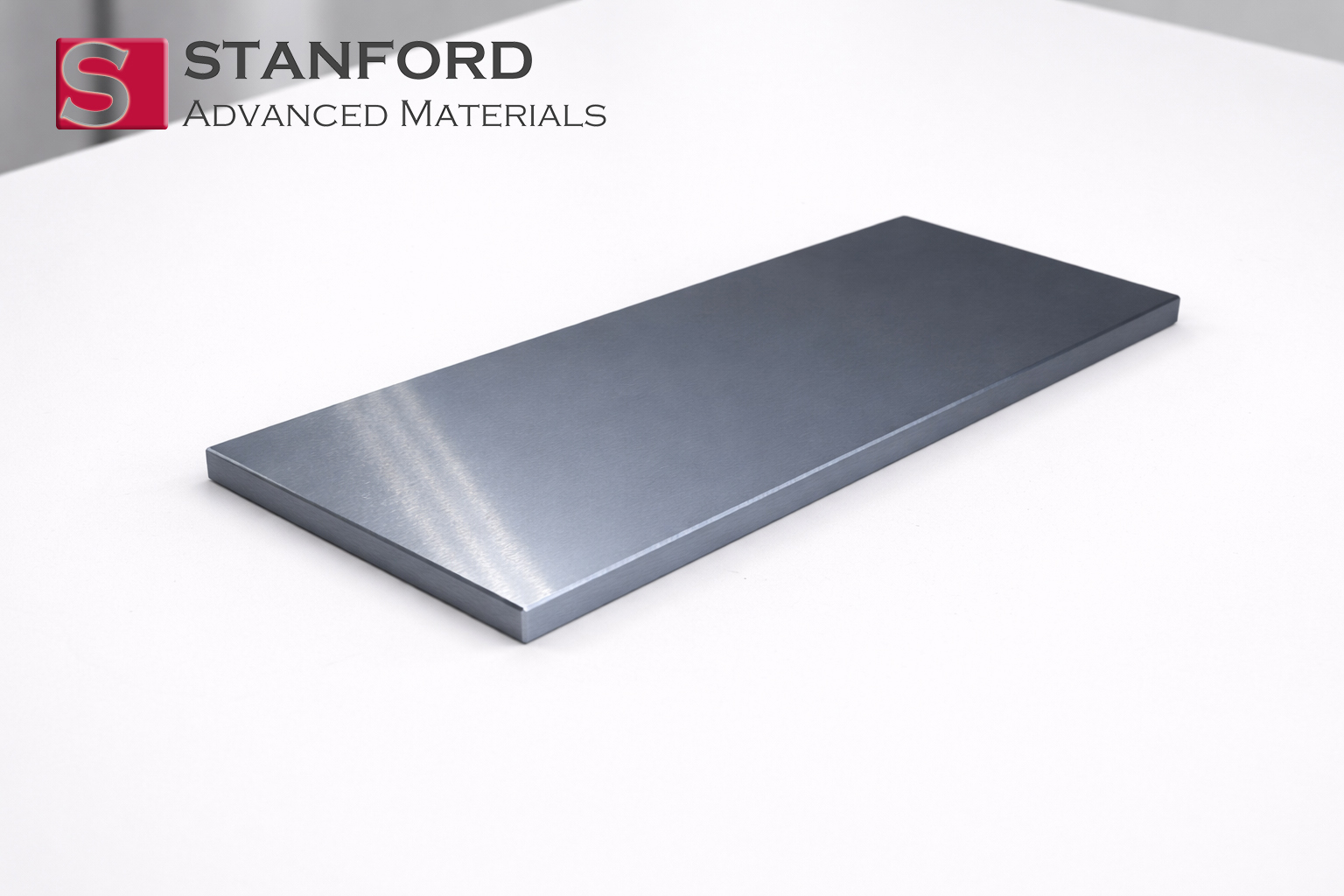
Our Molybdenum Disulfide (MoS₂) Planar Sputtering Targets are engineered from high-purity stoichiometric compound, enabling the deposition of thin films that serve two distinct, high-value purposes: as superior solid lubricants in vacuum and aerospace environments, and as layered semiconductor materials for next-generation electronics and optoelectronics.
| Material | Molybdenum Disulfide (MoS₂) |
| Material Class | Layered Transition Metal Dichalcogenide (TMDC) |
| Purity | ≥ 99.9% (on compound basis) |
| Form | Planar Sputtering Target |
Key Advantage: High stoichiometric control and density ensure the deposition of films with the correct 2H-phase crystal structure, which is essential for both low-friction performance and semiconducting electronic properties.
Customization: Stoichiometry, density, dimensions (thickness, length, width), and bonding fully customizable.
Typical Applications: Solid lubricant coatings for aerospace mechanisms & vacuum systems, low-friction coatings for automotive components, active channel layers in 2D thin-film transistors (TFTs), and catalyst layers.
For detailed evaluation and procurement (Standard Reference: ST11196).
| Parameter | Specification / Typical Value |
|---|---|
| Material | Molybdenum Disulfide (MoS₂) |
| Crystal Phase | Predominantly 2H (Hexagonal, Semiconducting) |
| Stoichiometry | Mo:S ≈ 1:2 (Controlled) |
| Purity (Compound Basis) | ≥ 99.9% |
| Density | ≥ 4.8 g/cm³ (Typically >90% T.D.) |
| Layered Structure | Yes (van der Waals layers) |
| Band Gap (Bulk 2H) | ~1.2-1.3 eV (Indirect); Thin-film: ~1.8 eV (Direct) |
| Standard Shape | Rectangular Planar |
| Dimensions | Fully Customizable (e.g., 170x90x6 mm) |
| Sputtering Method | RF Magnetron (Recommended due to insulating nature) |
| Bonding Options | Bonding to metal backing plates available for improved heat dissipation |
| Certification | Certificate of Analysis (CoA) with XRD phase data provided |
1. The Ultimate Solid Lubricant for Demanding Environments
MoS₂’s lubricity stems from its layered structure, where weakly bonded sulfur sheets easily shear over one another. Sputtered MoS₂ films are exceptional because they:
Perform in Vacuum & Dry Environments: Unlike graphite, MoS₂ does not require adsorbed water vapor to lubricate, making it ideal for spacecraft mechanisms, satellite components, and high-vacuum systems.
Exhibit Low Friction Coefficients: As low as 0.01-0.03 in ideal conditions.
Adhere Well to Various Substrates: Provides durable lubrication on metals, ceramics, and composites.
2. A Pioneering 2D Semiconductor Material
Beyond lubrication, MoS₂ is a flagship two-dimensional (2D) semiconductor. When sputtered under controlled conditions (often with post-deposition annealing), it can form ultrathin, polycrystalline films with tunable electronic properties for:
Flexible & Transparent Electronics: As the active channel in thin-film transistors (TFTs) for displays and sensors.
Optoelectronics: In photodetectors and potential light-emitting devices due to its direct bandgap in monolayer form.
Catalysis: As an efficient catalyst for the hydrogen evolution reaction (HER).
3. Sputtering Challenges and Solutions
MoS₂ is a semiconducting/insulating compound with a tendency to lose sulfur (decompose) under energetic bombardment. Achieving stoichiometric, 2H-phase films requires:
RF Sputtering: To prevent target charging and allow better process control.
Reactive/Assisted Sputtering: Sometimes performed in a mild sulfur-containing atmosphere to maintain stoichiometry.
High-Density Target: Our dense, phase-pure targets provide a stable source material, minimizing preferential sputtering of sulfur and leading to more reproducible films.
We employ X-ray Diffraction (XRD) as a critical tool to verify the dominant 2H phase and detect unwanted phases (e.g., 1T metallic phase, MoOₓ, or elemental S). Raman spectroscopy can also be used for phase identification. Elemental analysis (e.g., combustion analysis for S) confirms stoichiometry. This multifaceted characterization is essential given the strong dependence of film properties on the target’s phase and composition.
Dual-Application Expertise: We understand the distinct material requirements for both tribological coatings and advanced semiconductor research.
Control of Layered Compounds: We specialize in processing TMDCs like MoS₂ to preserve their layered structure and desired phase in the target.
Research & Industrial Focus: We supply targets for fundamental studies on 2D materials as well as for volume coating of precision mechanical components.
Discuss Your Application & Request a Quote
MoS₂ targets serve highly specialized fields. For optimal support, please specify:
Primary application (Solid lubricant coating for [environment] / 2D semiconductor research / Catalysis).
Desired target dimensions and any phase/stoichiometry requirements.
Sputtering system type (RF/DC) and any post-deposition treatment planned.