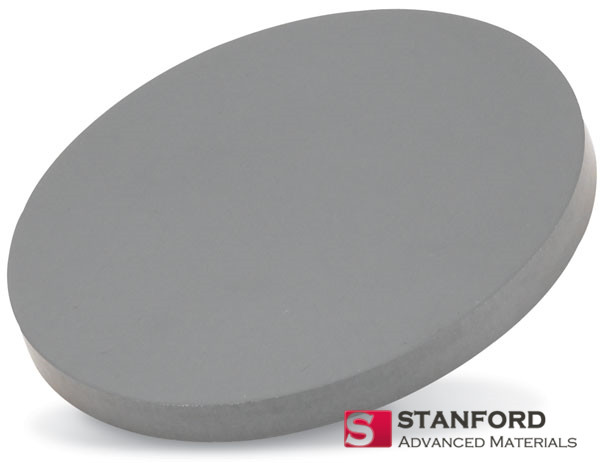
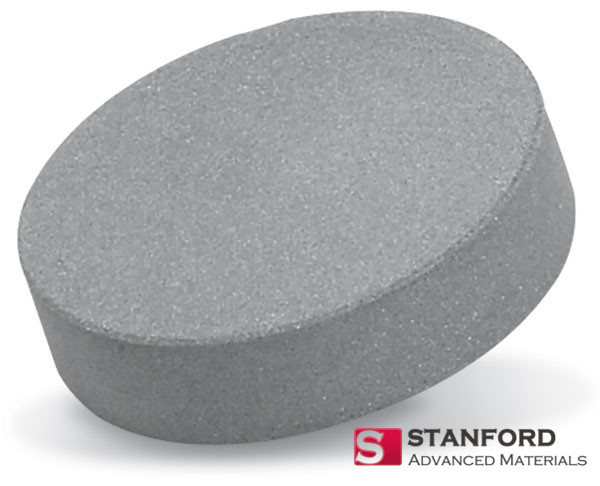
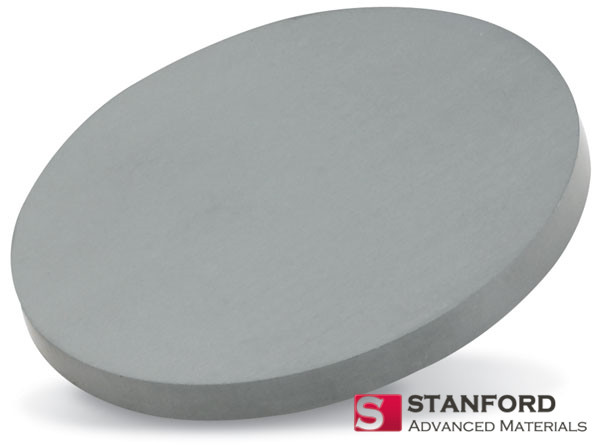
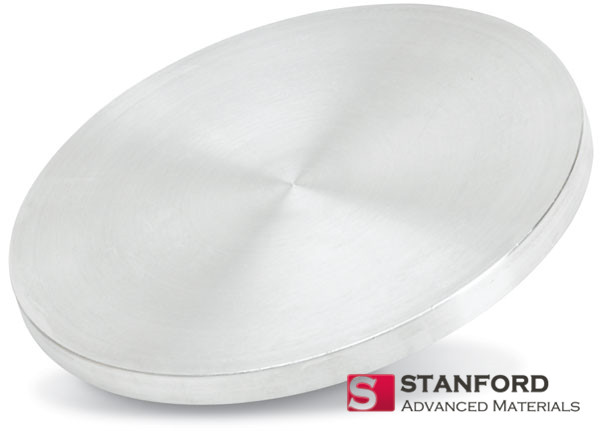
Our Molybdenum Carbide (Mo₂C) Planar Sputtering Targets are engineered from a dense, high-purity refractory compound, offering exceptional hardness, high-temperature stability, and chemical inertness. Ideal for depositing thin films that provide superior wear resistance, low friction, and catalytic activity in demanding industrial and energy applications.
| Material | Molybdenum Carbide (Mo₂C) |
| Key Properties | High Hardness, Thermal Stability, Catalytic Activity |
| Purity | ≥ 99.9% (on metals basis) |
| Form | Planar Sputtering Target |
Key Advantage: High density and phase purity ensure stable sputtering of stoichiometric Mo₂C films, which exhibit a unique combination of ceramic-like hardness and metallic conductivity.
Customization: Purity, dimensions (thickness, length, width), and bonding to backing plates fully customizable.
Typical Applications: Ultra-hard protective coatings for cutting tools, wear-resistant surfaces for aerospace components, catalyst layers for hydrogen evolution reaction (HER), and low-friction tribological coatings.
For detailed evaluation and procurement (Standard Reference: ST11195).
| Parameter | Specification / Typical Value |
|---|---|
| Material | Molybdenum Carbide (Mo₂C) |
| Phase | Primarily hexagonal β-Mo₂C (other phases available upon request) |
| Purity (Metals Basis) | ≥ 99.9% |
| Density | ≥ 9.0 g/cm³ (Typically >95% T.D.) |
| Hardness (Bulk, Vickers) | ~1500 – 1800 HV |
| Melting Point | ~2690 °C |
| Electrical Conductivity | Metallic (Good conductor) |
| Standard Shape | Rectangular Planar (e.g., 15x15x3 mm) |
| Dimensions | Fully Customizable |
| Sputtering Method | DC Magnetron (Primary), Pulsed-DC |
| Bonding Options | Bonding to Cu or Mo backing plates recommended |
| Certification | Certificate of Analysis (CoA) with XRD phase data provided |
1. A Material Bridging Hardness and Functionality
Mo₂C belongs to a class of materials known as interstitial carbides, where carbon atoms occupy the interstices in a molybdenum lattice. This results in:
Exceptional Hardness & Wear Resistance: Comparable to many oxides and nitrides, making it excellent for protecting cutting tools, molds, and mechanical parts against abrasion and adhesion.
Metallic Conductivity: Unlike insulating ceramics, Mo₂C is a good electrical (and thermal) conductor, which is beneficial for electrodes or in applications requiring electrical continuity.
Catalytic Properties: Mo₂C is a highly active and cost-effective non-precious metal catalyst, especially for the Hydrogen Evolution Reaction (HER) in water splitting and other electrochemical processes.
2. Sputtering Dense, Stoichiometric Films
The performance of a sputtered Mo₂C coating is highly dependent on the density and stoichiometry of the target. Low-density targets can lead to porous, carbon-deficient films with poor mechanical properties. Our targets are produced via high-temperature sintering or hot pressing of high-purity powders under controlled atmospheres to achieve near-theoretical density and the desired β-Mo₂C phase, ensuring the deposited film replicates these superior properties.
3. Application-Specific Guidance
Tooling & Industrial Wear Protection: Deposited as a hard coating on drills, end mills, and forming tools to extend service life when machining abrasive materials.
Aerospace & Automotive: For coating bearings, gears, and other components subjected to high loads and temperatures, reducing friction and wear.
Energy & Catalysis: As a thin-film electrode or catalyst layer in electrolyzers for green hydrogen production, fuel cells, and chemical sensors.
Tribological Coatings: In combination with other phases (like DLC) to create low-friction, high-durability surface films.
Each Mo₂C target is characterized by X-ray Diffraction (XRD) to confirm the dominant phase and absence of unwanted phases (e.g., Mo, MoC, graphitic carbon). Density is measured via the Archimedes method. Microstructural analysis (SEM) verifies fine grain size and low porosity. This data is essential for predicting and reproducing thin-film performance.
Expertise in Refractory Compounds: We specialize in manufacturing high-density, phase-pure carbide and nitride targets that are challenging to sinter.
Cross-Industry Application Knowledge: We understand the requirements for both mechanical wear coatings and functional catalytic films.
Process-Oriented Manufacturing: We tailor target properties (phase, density) to match your specific deposition process and film performance goals.
Get a Formal Quote or Technical Consultation
To discuss your Mo₂C coating requirements, please provide:
Intended application (e.g., tool coating, catalytic layer, wear resistance).
Desired target dimensions or substrate size.
Any specific phase or property requirements for your film.