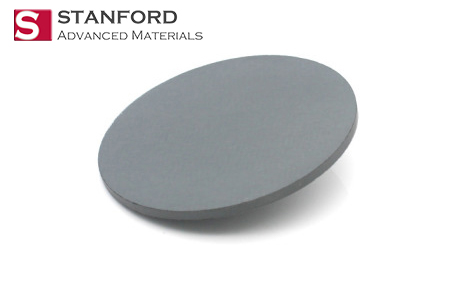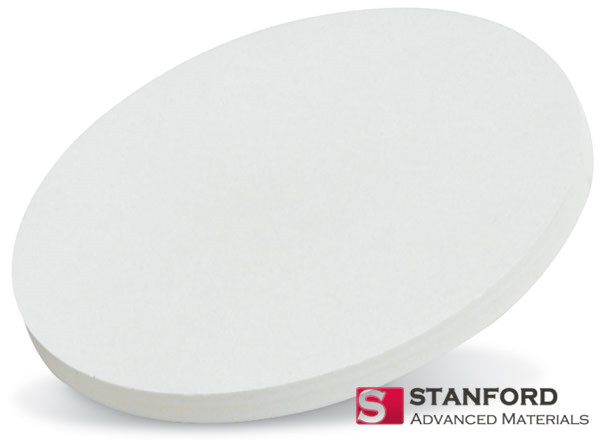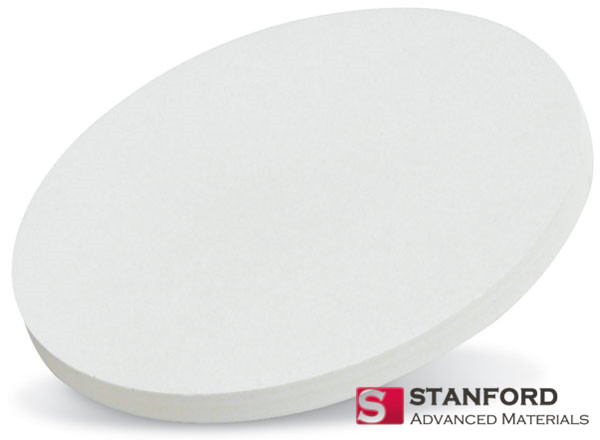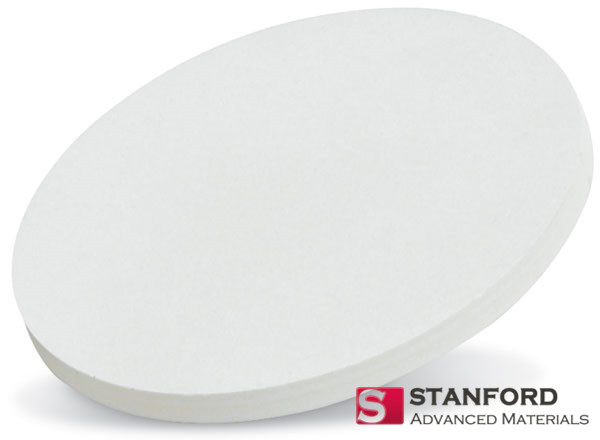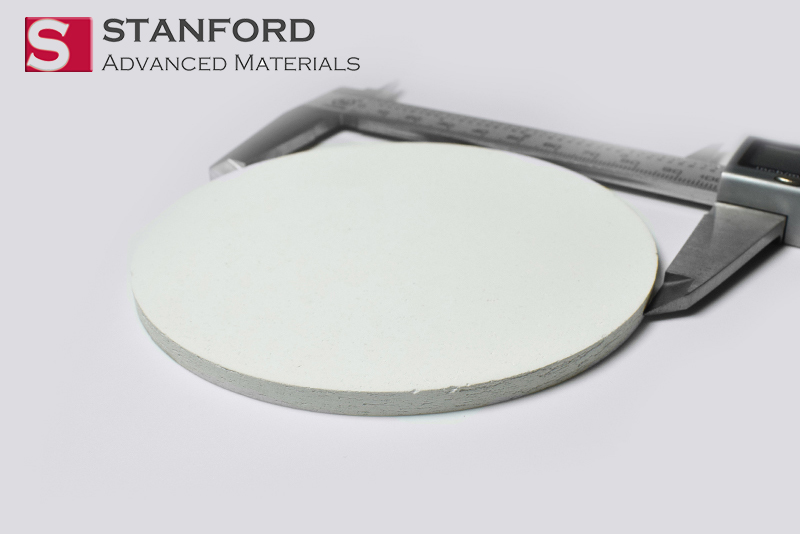
Our Sodium Phosphate (Na₃PO₄) Sputtering Targets are specialized ceramic targets designed for the deposition of sodium-containing phosphate thin films. These films are of significant interest in the development of next-generation energy storage technologies, particularly as solid electrolytes for sodium-ion and solid-state batteries, as well as in specialized optical and dielectric applications.
| Material | Sodium Phosphate (Na₃PO₄) |
| Typical Purity | ≥ 99.9% |
| Form & Shape | Planar Sputtering Target (Round/Disc) |
| Crystal Phase | Amorphous or Crystalline (as processed) |
| Key Properties | Sodium Ion Conductor | High Thermal Stability | Dielectric Material |
| Key Advantage | Provides a controlled, high-purity source of sodium and phosphate for depositing thin-film solid electrolytes, enabling research and development in advanced sodium-based electrochemical devices. |
Key Advantage: Enables precise deposition of sodium phosphate films with controlled stoichiometry and microstructure, which is critical for achieving high ionic conductivity and stability in thin-film solid-state electrolytes.
Customization: Purity, dimensions (standard Dia. 75mm x 5mm Thick), density, and phase (amorphous vs. crystallized) can be tailored to specific research or process requirements.
Primary Applications: Solid electrolyte layer in thin-film sodium-ion and solid-state batteries; sodium source layer in electrochemical devices; dielectric or protective coating in specialized optics; research on sodium-ion conduction mechanisms.
Specifications for depositing functional sodium phosphate films via RF sputtering.
| Parameter | Specification / Details |
|---|---|
| Material | Trisodium Phosphate (Na₃PO₄) |
| Typical Purity | ≥ 99.9% |
| Crystal Structure/Form | Typically supplied in a densified ceramic form; films can be deposited as amorphous or crystalline (often hexagonal) depending on process conditions. |
| Density (Target) | ≥ 90% of theoretical density (Theoretical ~2.54 g/cm³) |
| Melting/Decomposition | Decomposes before melting (~1583°C) |
| Sodium Content | ~42.1 wt% Na (Theoretical for Na₃PO₄) |
| Ionic Conductivity (Film) | Strongly process-dependent. Crystalline Na₃PO₄ films can exhibit moderate Na⁺ ion conductivity, which can be enhanced by doping or creating composite structures. |
| Standard Shape & Size | Round Planar Target: 75 mm Diameter x 5 mm Thickness (Standard) |
| Custom Dimensions | Diameter, thickness, and shape (rectangular) fully customizable |
| Surface Finish | Ground and polished for RF sputtering compatibility |
| Bonding | Typically bonded to a copper backing plate using conductive epoxy or specialized bonding for efficient RF coupling and cooling |
| Manufacturing Method | Ceramic processing: high-purity powder synthesis, followed by pressing and sintering under controlled atmosphere |
| Sputtering Method | RF Magnetron Sputtering (Standard due to insulating nature) |
| Quality Documentation | Certificate of Analysis with purity, phase (XRD), and major impurity data |
The primary drive for Na₃PO₄ sputtering targets is energy storage research:
Beyond electrolytes, Na₃PO₄ films serve other functions in device fabrication:
Depositing films from a Na₃PO₄ target requires careful process control:
Stanford Advanced Materials implements specialized controls for ceramic phosphate targets:
To receive a formal quotation or technical consultation, please provide: