(949) 407-8904 Mon - Fri 08:00 - 17:00 1940 East Deere Avenue, Suite 100, Santa Ana, CA 92705, USA

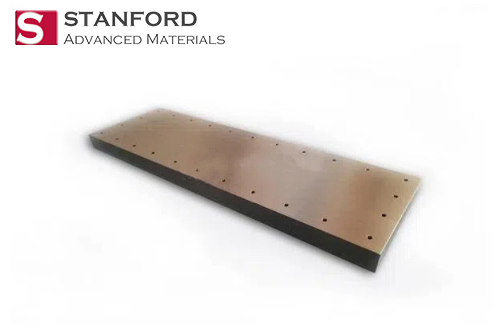
ST11215 Tantalum Carbide (TaC) Planar Sputtering Target

Our Tantalum Carbide (TaC) Planar Sputtering Targets are engineered from one of the hardest known refractory compounds. Designed for depositing ultra-hard, wear-resistant, and chemically inert ceramic thin films, TaC targets are essential for applications demanding extreme surface durability and thermal stability in aggressive operational environments.

Product Code ST11215 (Standard Reference)
Material Tantalum Carbide (TaC)
Typical Purity ≥ 99.9%
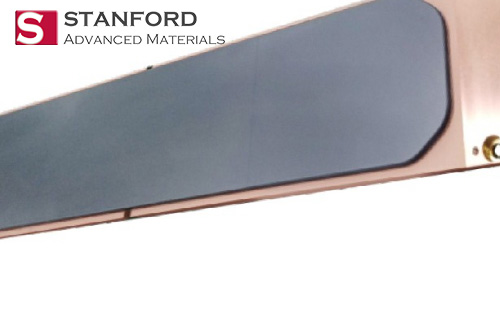
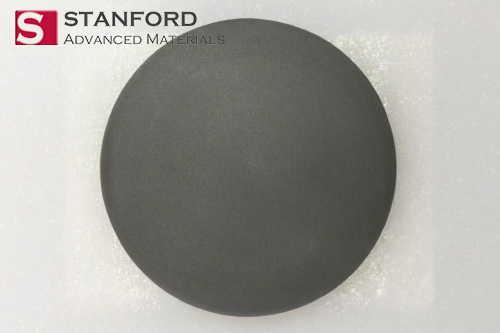
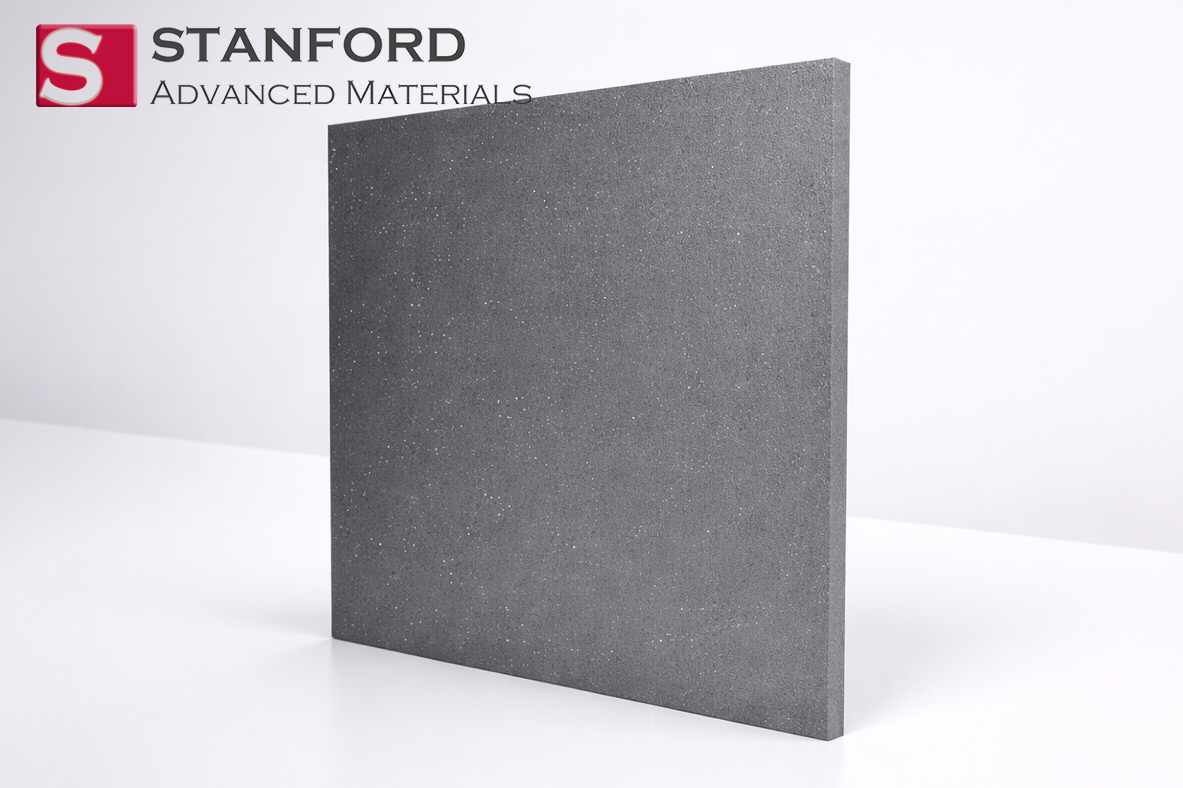
Form & Shape Planar Sputtering Target (Rectangular/Disc, Customizable)
Key Properties Extreme Hardness (~16-20 GPa) | High Melting Point (~3880°C) | Excellent Wear & Chemical Resistance
Key Advantage Enables deposition of ultra-hard, protective ceramic coatings that significantly extend the service life of components exposed to severe wear, high temperatures, or corrosive media.

Key Advantage: Produces films with exceptional hardness and thermal stability, offering superior protection against abrasion, oxidation, and chemical attack compared to metallic coatings.

Customization: Stoichiometry (Ta:C ratio), purity, dimensions, and bonding are fully customizable to meet specific process and performance requirements.

Primary Applications: Wear-resistant coatings for cutting tools and forming dies; protective layers on aerospace components; diffusion barriers and hard masks in semiconductor processing; tribological coatings for mechanical parts.


Description

Complete Technical Specifications & Capabilities

Comprehensive specifications for the deposition of advanced ceramic films. All parameters are tailored to optimize coating performance and process integration.

Parameter Specification / Details
Material Tantalum Carbide (TaC)
Typical Purity ≥ 99.9% (Higher grades available)
Crystal Structure Face-Centered Cubic (FCC) – NaCl (Rock Salt) type
Stoichiometry Typically near 1:1 Ta:C (Customizable within a range, e.g., TaC0.9 to TaC1.0)
Density ~14.3 – 14.5 g/cm³ (Theoretical ~14.5 g/cm³)
Melting Point Approx. 3880 °C (7016 °F) – One of the highest known
Microhardness (Vickers) ~16 – 20 GPa (Material dependent)
Thermal Conductivity ~21 W/(m·K) at 20°C
Standard Shape Planar – Rectangular, Circular (Disc), or Custom
Dimensions Fully Customizable (Thickness, Length, Width, Diameter)
Surface Finish Optimized for ceramic sputtering (e.g., ground and polished)
Bonding Option Available bonded to copper or other backing plates using specialized high-temperature bonding techniques compatible with ceramic targets.
Manufacturing Method Reactive Sintering / Hot Pressing to achieve high density and uniformity.
Quality Documentation Certificate of Analysis (CoA) provided, confirming composition, density, and phase purity.

Technical & Application Deep Dive

1. The Ultimate Protective Coating: Leveraging TaC’s Extreme Properties

Tantalum Carbide coatings deposited from these targets offer a unique combination of properties for surface engineering:

  • Unmatched Wear Resistance: With a hardness approaching that of diamond, TaC films dramatically reduce abrasion and adhesive wear on cutting tools (end mills, inserts), forming dies, and precision bearing surfaces, leading to vastly extended tool life.
  • Thermal and Chemical Barrier: Its exceptionally high melting point and chemical inertness make TaC an ideal coating for components exposed to extreme heat and corrosive environments, such as turbine blades, rocket nozzles, and chemical reactor parts.
  • Oxidation Resistance: While carbide materials can oxidize at very high temperatures, dense TaC films provide superior oxidation resistance compared to many other hard coatings, maintaining integrity in high-temperature air environments.

2. Functional Applications Beyond Hard Coatings

TaC’s properties enable its use in several advanced technological areas:

  • Semiconductor Processing: Used as a sputtering source for depositing ultra-hard, chemically inert masking layers or etch-stop layers in demanding plasma etch processes. Also investigated as a potential diffusion barrier material.
  • Optical and Decorative Coatings: The dark gray/black appearance and extreme durability of TaC make it suitable for decorative wear-resistant coatings and for optical components requiring robust surfaces.
  • Research on Ultra-High-Temperature Ceramics (UHTCs): Serves as a precursor for depositing thin films in studies focused on next-generation UHTCs for aerospace thermal protection systems.

3. Sputtering Considerations for Ceramic Targets

Sputtering from a compound ceramic target like TaC requires specific process understanding:

  • Conductive Target: TaC is electrically conductive, allowing for efficient DC Magnetron Sputtering, which is more straightforward and cost-effective than RF sputtering required for insulating ceramics.
  • Stoichiometry Transfer: The film composition is generally close to the target stoichiometry. Slight adjustments can be made via reactive sputtering (e.g., adding small amounts of nitrogen or changing argon pressure) to fine-tune film properties like stress or resistivity.
  • Thermal Management: Due to the high melting point, the target can withstand high power densities, but effective cooling of the backing plate is crucial to maintain process stability and prevent thermal cracking.

Quality Assurance & Manufacturing

Stanford Advanced Materials ensures the highest quality through controlled ceramic processing:

  • Phase and Composition Analysis: X-ray Diffraction (XRD) is used to verify the primary TaC phase and detect any unwanted secondary phases (e.g., free Ta or carbon). Chemical composition is confirmed via combustion analysis for carbon and GDMS for metallic impurities.
  • Density and Microstructure Control: High-density (>98% theoretical) is achieved through optimized sintering. Scanning Electron Microscopy (SEM) examines grain size, uniformity, and the absence of porosity, which is critical for stable sputtering performance and film quality.
  • Mechanical Integrity: Ultrasonic testing checks for internal cracks or delaminations, especially important for bonded targets.

Why Choose SAM for Your Tantalum Carbide Targets?

  • Expertise in Refractory Compound Fabrication: We specialize in manufacturing high-density, homogeneous sputtering targets from challenging ceramic compounds like TaC.
  • Focus on Performance: Our process is designed to maximize target density and phase purity, directly translating to higher deposition rates, lower arcing, and more consistent film properties.
  • Custom Solutions for Demanding Applications: We work with customers to tailor the stoichiometry, size, and bonding for specific tooling, aerospace, or research applications.
  • Reliable, High-Quality Supply: Consistent material properties and reliable delivery support both prototyping and production-scale coating operations.

Next Steps: Get a Custom Quote

To receive a formal quotation or technical consultation, please provide:
  1. Desired stoichiometry (Ta:C ratio if specific) or general application (e.g., tool coating, wear resistance).
  2. Target dimensions (Thickness x Width x Length or Diameter x Thickness) and required shape.
  3. Bonding requirements (backing plate material).
  4. Any specific purity or density requirements beyond our standard.
Request a Quote