(949) 407-8904 Mon - Fri 08:00 - 17:00 1940 East Deere Avenue, Suite 100, Santa Ana, CA 92705, USA

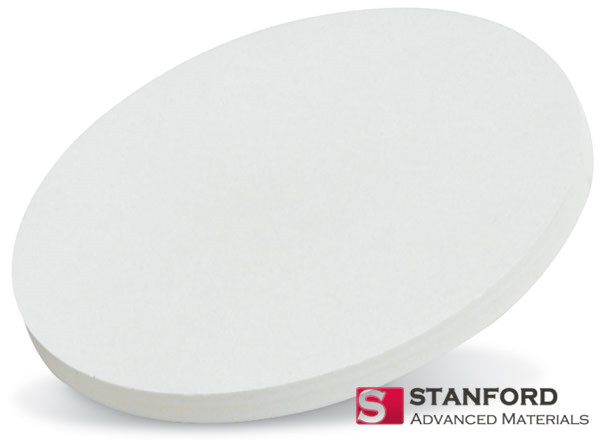
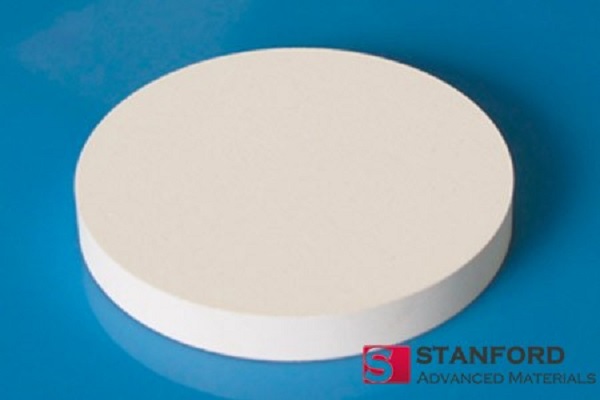
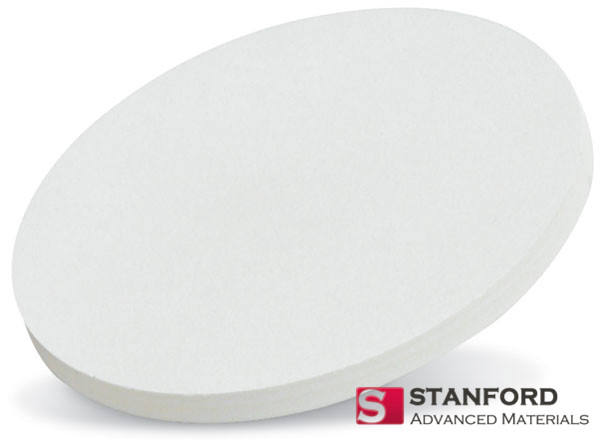
ST11207 Ferroelectric PZT Sputtering Target, Lead Zirconate Titanate (Pb(Zr,Ti)O₃)

Our Ferroelectric Lead Zirconate Titanate (PZT) Sputtering Targets are engineered for advanced thin-film applications in micro-electromechanical systems (MEMS), piezoelectric sensors, and non-volatile ferroelectric memory (FeRAM). Precise control of the zirconium-to-titanium (Zr/Ti) ratio and crystal phase is critical to achieving optimal film performance.

Material Lead Zirconate Titanate, Pb(Zrx,Ti1-x)O₃
Standard Zr/Ti Ratio 52/48 (Morphotropic Phase Boundary)
Key Property High Piezoelectric Coefficient & Ferroelectric Polarization
Form Sintered Ceramic Sputtering Target

Key Advantage: Certified perovskite phase purity and stoichiometry via XRD/ICP analysis, ensuring reproducible dielectric and piezoelectric properties in deposited films.

Customization: Available in round or rectangular shapes with full customization of dimensions, Zr/Ti ratio, and bonding options.

Typical Applications: Thin films for MEMS actuators, ultrasonic transducers, FeRAM cells, and pyroelectric detectors.


Description

Complete Technical Specifications

For detailed evaluation and procurement (Standard Reference: ST11207).

Parameter Specification / Typical Value
Material (Nominal) Pb(Zr0.52,Ti0.48)O₃
Purity ≥ 99.9% (3N) / ≥ 99.99% (4N) Available
Crystal Phase Perovskite (Tetragonal/Rhombohedral near MPB)
Density > 7.6 g/cm³ (≥ 95% Theoretical Density)
Curie Temperature (Tc) ~320 – 380°C (Depends on Zr/Ti Ratio)
Relative Permittivity (εr) ~ 500 – 3000 (Bulk, Film Dependent)
Available Shapes Round (Disc), Rectangular, Planar
Dimensions Fully Customizable (Diameter, Length, Width, Thickness)
Sputtering Method RF Magnetron Sputtering (Recommended)
Bonding Options Indium or epoxy bonding to Cu/Mo backing plates
Certification Certificate of Analysis (CoA) with XRD Phase Analysis & ICP Composition Data

Technical & Application Notes

1. The Material of Choice for Smart Systems: MEMS & Sensors

PZT thin films offer the highest piezoelectric coefficients among practical materials, making them indispensable for:

  • MEMS Actuators & Energy Harvesters: Used to convert electrical signals into precise mechanical motion (e.g., inkjet printheads, micromirrors) or ambient vibration into electrical energy.
  • Ultrasonic Transducers & Sensors: High sensitivity makes PZT ideal for medical ultrasound imaging, non-destructive testing (NDT), and precision distance/proximity sensors.
  • Inertial Sensors: Integrated into gyroscopes and accelerometers for improved performance in consumer electronics and automotive systems.

Target Key: A homogeneous target at the Morphotropic Phase Boundary (MPB, Zr/Ti ~52/48) is critical to achieve the maximum piezoelectric response (d33) in the deposited film.

2. Enabling Next-Generation Memory: Ferroelectric RAM (FeRAM)

PZT’s non-volatile ferroelectric polarization allows it to function as a memory element. Sputtering from a high-quality, phase-pure PZT target is a key process for depositing the active layer in FeRAM cells, which offer fast write speeds, low power consumption, and high endurance compared to conventional Flash memory.

3. Specialized Optoelectronic & Acoustic Applications

  • Pyroelectric Detectors: PZT films are sensitive to changes in temperature, making them suitable for uncooled infrared (IR) detectors in thermal imaging and motion sensing.
  • Surface Acoustic Wave (SAW) Devices: Used in filters and resonators for RF and wireless communication systems.

4. Deposition & Process Integration Considerations

Sputtering PZT requires careful process control to achieve the correct film crystallinity (often requiring post-deposition annealing):

  • RF Sputtering: Essential for depositing this insulating ceramic material.
  • Oxygen Ambient: Reactive sputtering in an Ar/O₂ mix is typically used to prevent oxygen deficiency and maintain stoichiometry.
  • Substrate & Electrode Compatibility: Film properties are highly dependent on the bottom electrode (e.g., Pt, Ir, LNO) and substrate (e.g., Si, SiO₂, MgO).
  • Lead Volatility Management: Process parameters must be optimized to compensate for potential lead loss during deposition and annealing to maintain the correct Pb:(Zr+Ti) ratio.

Quality Assurance

For functional ceramic targets like PZT, chemical composition and crystal phase are as critical as purity. Our quality protocol includes:

  1. Quantitative X-ray Diffraction (XRD): Guarantees the dominant perovskite phase and quantifies undesirable pyrochlore or other secondary phases.
  2. Inductively Coupled Plasma (ICP) Analysis: Verifies the precise Pb, Zr, and Ti stoichiometry and quantifies trace impurities.
  3. Surface Profilometry & Density Measurement: Ensures target density, surface uniformity, and absence of large pores or cracks for stable, arcing-free sputtering.

Why Stanford Advanced Materials (SAM)

  • Functional Ceramics Expertise: We specialize in oxide targets where stoichiometry and phase define performance, not just purity.
  • Tailored Stoichiometry: We can adjust the Zr/Ti ratio to suit your specific research or device needs, moving beyond the standard MPB composition.
  • Full-Process Support: From target manufacturing to providing guidance on RF sputtering and annealing parameters for PZT films.

Request More Information

Specify Your Application for Optimal Configuration
To ensure you receive the most suitable PZT target, please provide details on:
  1. Primary application (e.g., MEMS actuator, FeRAM research, pyroelectric sensor).
  2. Desired Zr/Ti ratio and required crystal phase (if known).
  3. Target dimensions, shape, and bonding requirements.
  4. Any specific film property goals (e.g., d33, Pr, εr).
Request a Quote