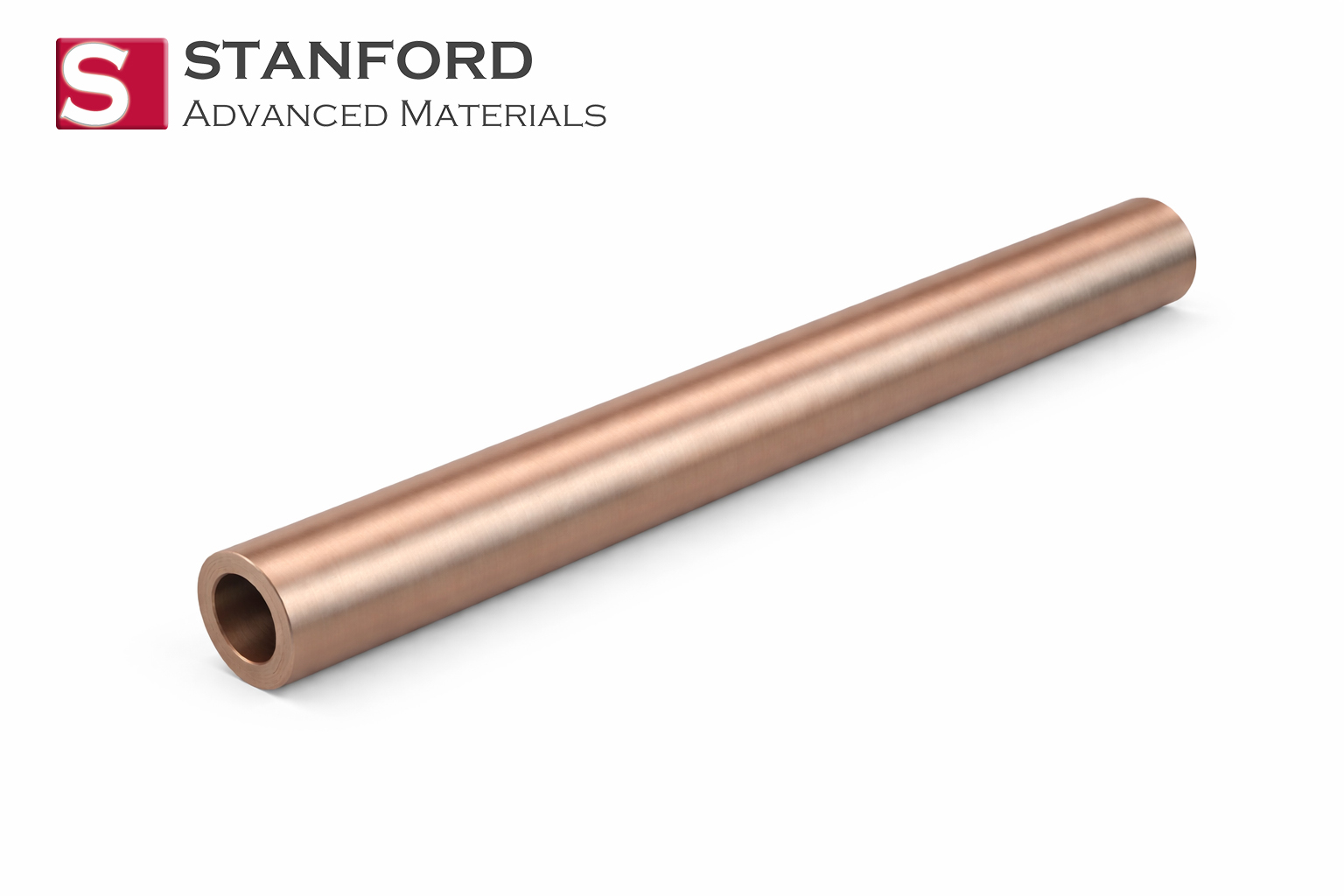
Our Copper Titanium (CuTi) Rotary Sputtering Targets are engineered for high-throughput deposition of functional alloy coatings. Primarily used in reactive sputtering with nitrogen, they enable the synthesis of hard, wear-resistant TiCuN or (Ti,Cu)N coatings that offer a unique combination of hardness, reduced friction, and aesthetic appeal for tools and components.
| Material | Copper Titanium Alloy (CuTi) |
| Standard Composition | Ti-rich (e.g., Ti-10%Cu to Ti-30%Cu) |
| Purity | ≥ 99.5% (Metal Basis) |
| Form | Rotary Sputtering Target (Tubular) |
Key Advantage: Copper addition to titanium-based coatings can improve toughness, reduce friction, and create distinctive bronze-to-purple decorative colors while maintaining good hardness.
Customization: Copper content (5-40 at.%), tube dimensions (OD, ID, Length), and purity fully customizable.
Typical Applications: Decorative PVD coatings on hardware & consumer goods, wear-resistant coatings on tools and molds, biomedical implant coatings, and tribological layers.
For detailed evaluation and procurement (Standard Reference: ST11187).
| Parameter | Specification / Typical Value |
|---|---|
| Material | Copper Titanium Alloy (CuTi) |
| Composition Range | Ti-5%Cu to Ti-40%Cu (Customizable) |
| Purity (Metal Basis) | ≥ 99.5% |
| Density | ~5.0 – 6.0 g/cm³ (Alloy dependent) |
| Standard Shape | Tubular (Rotary Target) |
| Key Dimensions | Custom OD, ID, Length |
| Melting Point Range | ~1500 – 1700 °C (Alloy dependent) |
| Sputtering Method | DC Magnetron (Metallic), Pulsed-DC Reactive (for Nitrides) |
| Bonding/Integration | Compatible with standard rotary magnetron systems |
| Certification | Certificate of Composition (CoC) provided |
1. Creating Multi-Functional Nitride Coatings
When sputtered in a nitrogen atmosphere, CuTi targets deposit (Ti,Cu)N coatings. The incorporation of copper into the titanium nitride lattice modifies key properties:
2. The Productivity Advantage of Rotary Design
For coating large batches of components (e.g., door handles, tools, watch cases) or applying uniform layers on large-area substrates, rotary targets offer unmatched efficiency:
3. Metallurgical Considerations for a Homogeneous Target
Titanium and copper have limited mutual solubility and different melting points. Producing a homogeneous alloy requires specialized techniques like Vacuum Arc Melting with multiple remelts or Mechanical Alloying followed by consolidation. SAM’s process ensures a fine, uniform distribution of copper in the titanium matrix, which is critical for achieving uniform sputter erosion and consistent coating composition.
We verify the alloy composition using Inductively Coupled Plasma (ICP) analysis. Microstructural homogeneity is assessed via Optical Microscopy and SEM/EDS to confirm the even distribution of copper. For rotary targets, we also ensure precise dimensional tolerances (OD, ID, straightness) to guarantee trouble-free integration and rotation in your cathode assembly.
Expertise in Decorative & Functional PVD Alloys: We understand the market needs for both performance and aesthetics in coatings.
Industrial Coating Focus: Our targets are designed for the reliability and volume requirements of commercial PVD coating companies.
Customization for Color & Performance: We work with you to tailor the Cu content to achieve your desired coating color and functional properties.
Get a Formal Quote or Composition Consultation
To select the optimal CuTi alloy for your coating application, please provide: