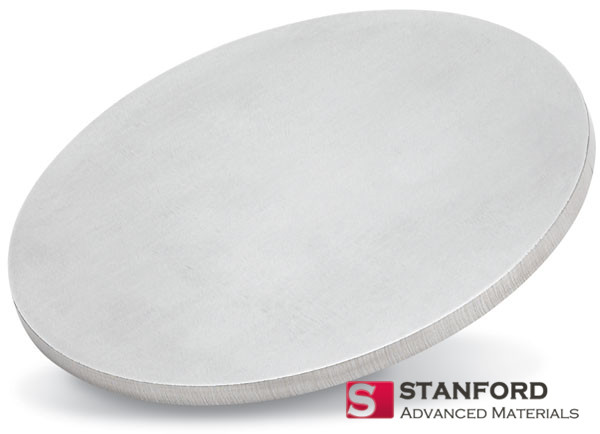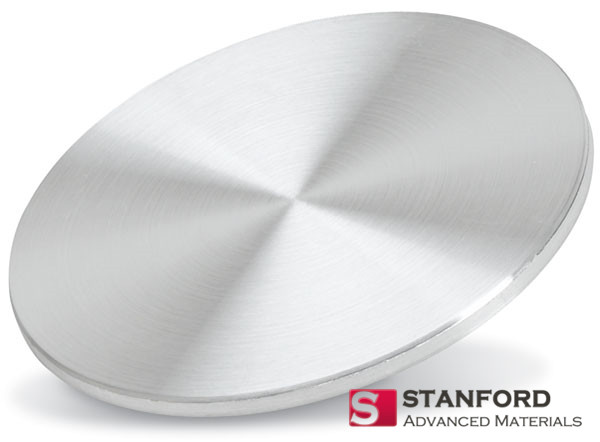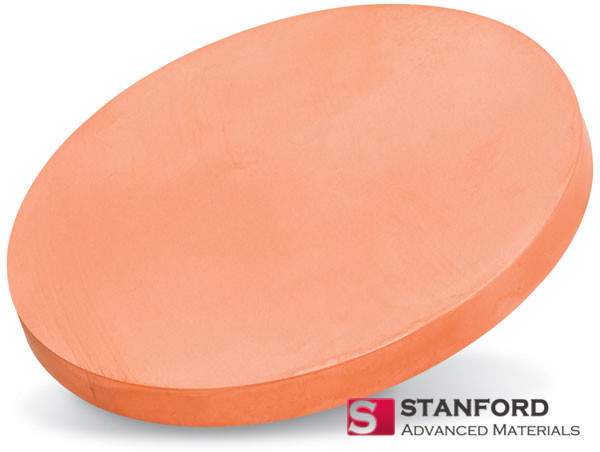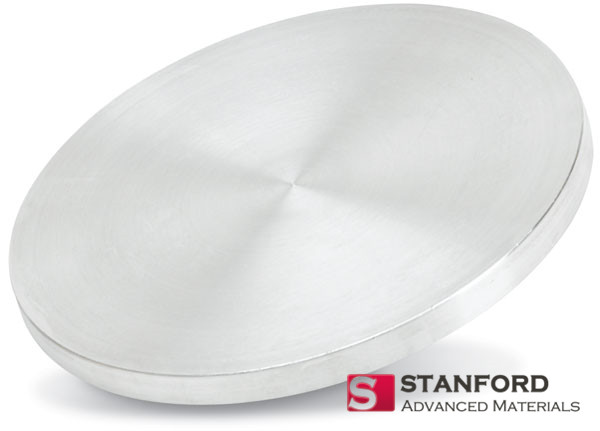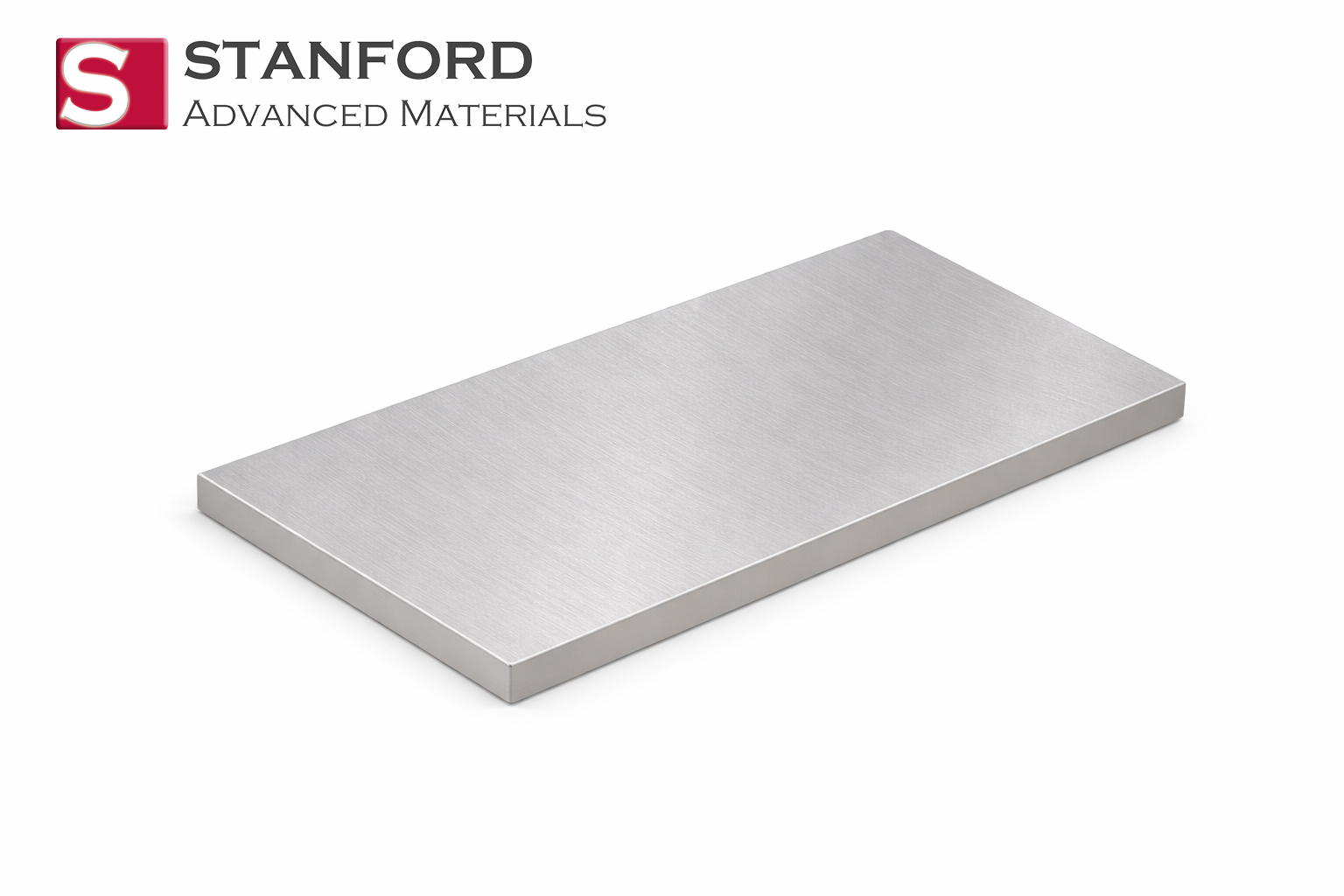
Our Copper Indium Gallium (CIG) Planar Sputtering Targets represent the pinnacle of material engineering for photovoltaics. By combining all three metals (Cu, In, Ga) into a single, homogeneous ternary alloy target, they enable a simplified and highly controlled single-target sputtering process for depositing the precise metal precursor layers required for high-efficiency Copper Indium Gallium Selenide/Sulfide (CIGS) solar cells.
| Material | Copper Indium Gallium Ternary Alloy (CIG) |
| Key Property | Single-Phase Homogeneity for Consistent Sputtering |
| Purity | ≥ 99.995% (4N5) |
| Form | Planar Sputtering Target |
Key Advantage: Enables co-sputtering of Cu, In, and Ga from one source, simplifying process control and ensuring excellent compositional uniformity in the deposited precursor film.
Customization: Precise control over Cu/(In+Ga) and Ga/(In+Ga) ratios, dimensions, and bonding.
Typical Applications: Single-target precursor deposition for CIGS and CIGSe thin-film solar cells, research into next-generation chalcopyrite PV materials.
For detailed evaluation and procurement (Standard Reference: ST11184).
| Parameter | Specification / Typical Value |
|---|---|
| Material | Copper Indium Gallium Alloy (CuInGa) |
| Standard Composition | Customizable to match desired Cu/(In+Ga) (~0.7-0.9) and Ga/(In+Ga) (~0.2-0.4) ratios |
| Purity (Metal Basis) | ≥ 99.995% |
| Density | ~7.5 g/cm³ (Achieved via Hot Isostatic Pressing) |
| Microstructure | Homogeneous, Fine-Grained Single Phase |
| Standard Shape | Rectangular Planar Target |
| Dimensions | Fully Customizable (Thickness, Length, Width) |
| Sputtering Method | DC Magnetron |
| Bonding Options | Bonding to Mo or Cu backing plate recommended for thermal management |
| Certification | Certificate of Composition (CoC) with ICP-MS data provided |
1. Simplifying CIGS Manufacturing with a Single Source
Traditional CIGS processes often use multiple elemental (Cu, In, Ga) or binary (CuGa, In) targets. Our single CIG ternary target consolidates this into one source, offering significant advantages:
Process Simplicity: Reduces the number of power supplies and controls needed.
Intrinsic Stoichiometric Control: The film composition is directly tied to the target’s bulk composition, minimizing drift and improving run-to-run reproducibility.
Excellent Uniformity: Promotes uniform distribution of all three elements across the substrate from a single erosion track.
2. The Metallurgical Challenge and Our Solution
Creating a homogeneous alloy from three elements with vastly different melting points (Cu: 1085°C, In: 157°C, Ga: 30°C) and mutual solubilities is extremely challenging. Indium and Gallium tend to segregate. SAM overcomes this by using advanced Mechanical Alloying followed by Hot Isostatic Pressing (HIP). This method produces a fully dense, nanocrystalline, and homogeneous solid solution, ensuring that every sputtered atom cloud has the correct Cu:In:Ga ratio.
3. The Critical Role in Photovoltaic Performance
The target’s composition dictates two key parameters in the final CIGS absorber after selenization/sulfurization:
Cu/(In+Ga) Ratio: Controls the semiconductor type (Cu-poor for high efficiency) and the formation of secondary phases.
Ga/(In+Ga) Ratio: Directly tunes the material’s bandgap (1.0 – 1.7 eV), allowing optimization for specific solar spectra or tandem cell applications.
We work with you to fabricate the exact composition your process requires.
Given the criticality of composition, we employ the highest levels of analysis. Inductively Coupled Plasma Mass Spectrometry (ICP-MS) is used for ultimate accuracy in quantifying all three elements and trace impurities. X-ray Diffraction (XRD) confirms the formation of a single-phase solid solution. Electron Probe Microanalysis (EPMA) with wavelength-dispersive spectroscopy (WDS) provides micron-scale composition mapping to definitively prove homogeneity. This unparalleled level of characterization is what justifies the ≥99.995% purity claim.
Discuss Your CIGS Process & Request a Custom Composition Quote
This target is the core of an optimized deposition process. To collaborate, please provide: